

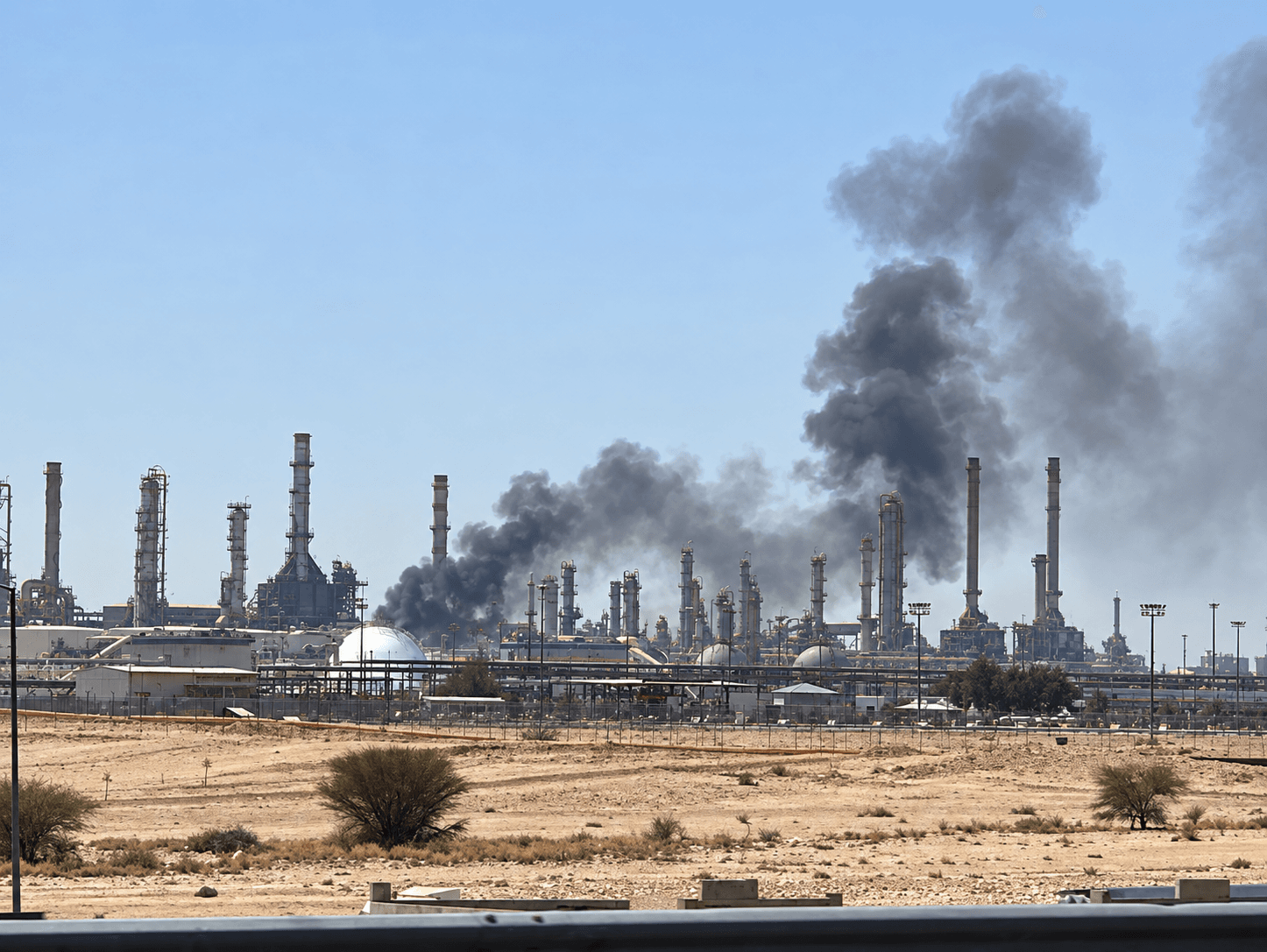
Saudi Arabia’s energy sector is facing renewed security concerns after a missile strike attributed to Yemen’s Houthi movement reportedly damaged an administrative building at Saudi Aramco’s headquarters in Dhahran. Reports published on 14 October said offices used by senior executives were affected, including areas associated with the company’s top leadership. No casualties were reported at the building. Saudi authorities described the resulting fire as limited, although later accounts indicated that parts of the interior had suffered significant damage.
The incident is drawing attention because Dhahran is more than the headquarters of a major oil company. It is the administrative centre of Saudi Aramco, the state-owned energy giant responsible for much of the kingdom’s oil production, processing and export operations. Damage to the complex could complicate management and coordination, even if the country’s production facilities continue operating normally.
The Houthis have claimed responsibility for targeting Aramco facilities and threatened further attacks on Saudi oil installations and airports. The warnings came amid an escalating exchange of strikes involving Saudi-led coalition forces and Houthi-held areas of Yemen, including oil-related facilities near Sanaa. The growing confrontation has placed energy infrastructure and civilian safety under renewed pressure.
For international energy markets, the biggest question is whether the Dhahran incident will remain an attack on an administrative site or mark the beginning of a broader campaign against facilities responsible for supplying Saudi crude to global markets.
As of 14 October, the available reports had not confirmed that the strike halted Saudi oil production. That distinction is important. Damage to a corporate headquarters can have serious security and operational consequences, but it does not automatically mean that oil production or exports have been disrupted.
DHAHRAN HEADQUARTERS HIT AS THE CONFLICT INTENSIFIES
The reported strike came as security concerns mounted across Saudi Arabia. On 13 October, Saudi authorities reported an attack on an Aramco administrative building in Dhahran and said emergency services had responded to a fire. Reports published the following day, citing regional officials, described damage to offices used by senior executives.
Associated Press reporting said the top three floors of a building used by senior executives had been damaged. One regional official said the office of Aramco chief executive Amin Nasser was among the areas affected. The officials spoke anonymously because they were not authorised to discuss the incident publicly.
Reuters separately reported that the fire spread across several floors, particularly in the building’s south wing. Sources described damaged ceilings, shattered windows and doors, and substantial destruction in executive office areas.
Saudi authorities, however, initially described the fire as limited. These accounts offer different perspectives on the incident: the official statement addressed the fire, while later reports provided further details about the damage inside the building.
At the time of reporting, the company had not released a detailed public account of the incident. Some employees were reportedly advised to work remotely, while certain functions were moved to other offices. Reports also indicated that oil production operations continued despite the damage to the headquarters complex.
This leaves two important questions. How extensive was the damage to the administrative building, and did the strike affect the wider system responsible for producing and delivering Saudi crude?
The first concerns the immediate physical impact. The second matters more directly to global energy supplies.
HOUTHIS THREATEN FURTHER ATTACKS ON OIL FACILITIES
The Houthis have warned that additional attacks on Saudi oil installations and airports could follow. On 14 October, the group said it had targeted Aramco facilities in Dhahran, an Aramco refinery in Riyadh and King Khalid International Airport.
The group’s military spokesman, Yahya Saree, said operations against Saudi targets would continue. He also warned workers and shipping companies to stay away from locations the Houthis had designated as targets.
These threats followed several days of escalating exchanges. Saudi-led coalition forces had issued evacuation warnings around Houthi-held oil facilities in Sanaa, including the al-Sabah central station. Houthi officials warned that further attacks on Yemen would bring retaliation against Saudi cities and infrastructure. Saudi authorities subsequently reported intercepting incoming missiles and other projectiles.
The confrontation forms part of the wider conflict involving the Houthis, Yemen’s Saudi-backed government and broader regional tensions linked to the US–Iran confrontation. The Houthis describe their attacks as retaliation for Saudi military action in Yemen, while Saudi Arabia and its partners view strikes against energy installations and civilian infrastructure as serious security threats.
The danger is that each new attack could trigger another round of retaliation. Oil facilities, airports, military sites and transport networks could face increasing pressure as the conflict expands.
Protecting energy infrastructure is particularly challenging because these facilities are spread across large areas. Refineries, pipelines, export terminals and processing plants have different security requirements, making it difficult to defend every location in the same way.
Even when an attack does not directly damage production equipment, the threat itself can disrupt normal operations. Companies may need to relocate employees, restrict access or introduce additional security measures while assessing the risk.
WHY THE ARAMCO STRIKE MATTERS TO GLOBAL OIL MARKETS
Saudi Arabia is the world’s leading crude oil exporter, making the security of its energy infrastructure a concern well beyond the Middle East.
Aramco operates an extensive network of production sites, processing facilities, pipelines, refineries and export terminals. Its Dhahran headquarters helps coordinate a business that supplies energy to customers around the world.
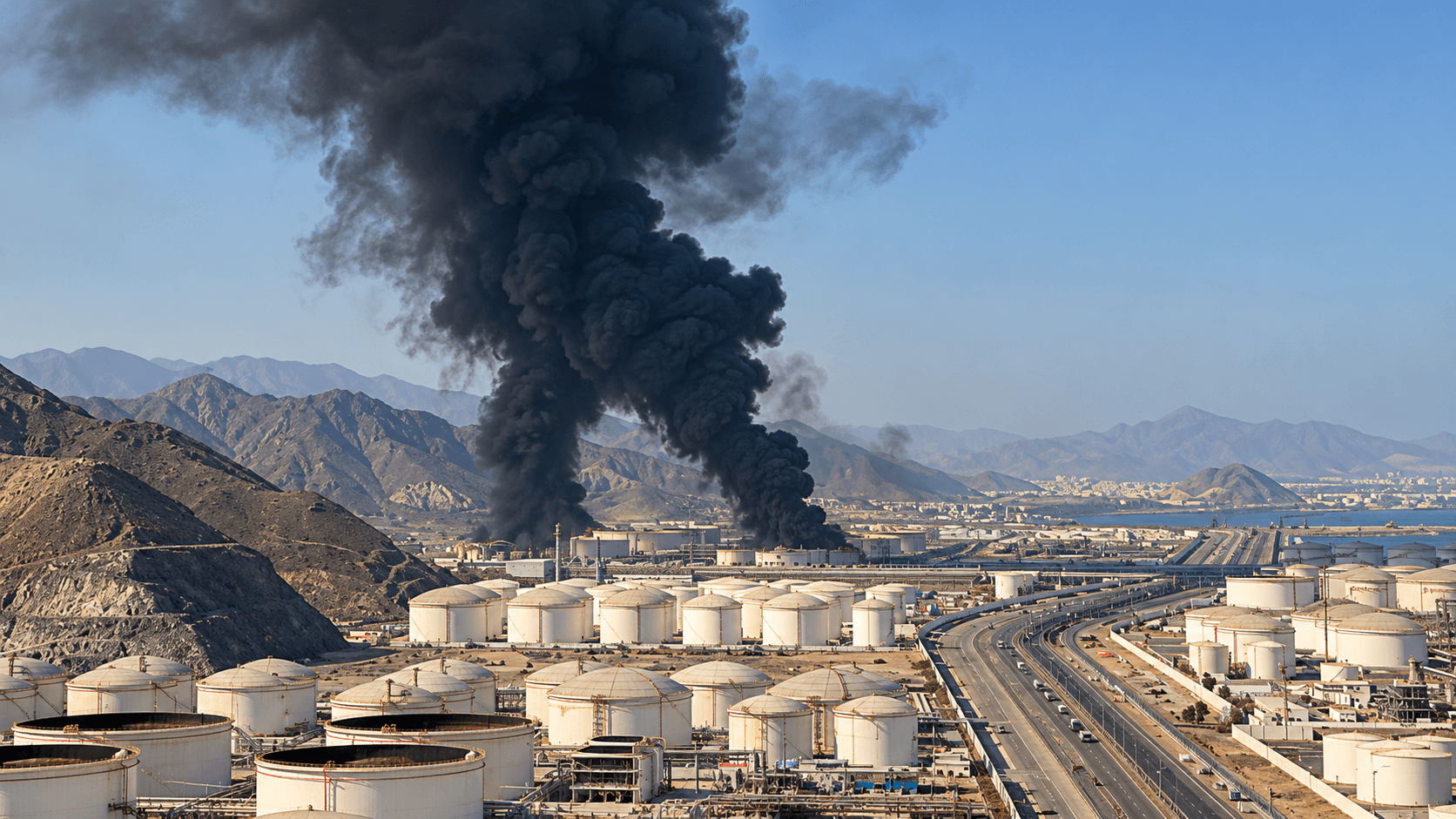
An attack on the headquarters does not automatically mean that oil supplies will decline. Crude production depends on physical wells, processing equipment, pipelines and export facilities, not simply on the offices where executives work.
However, an incident at the company’s main administrative centre can raise concerns about business continuity, security and the possibility of further attacks against more directly critical infrastructure.
Three issues deserve particular attention.
First, operational uncertainty. Damage to office space can force staff to relocate, disrupt communications and change management routines. These adjustments may be manageable without stopping production, but they add pressure during an already tense security situation.
Second, the risk of further attacks. The Houthi threats against additional oil facilities could prompt Saudi authorities and energy companies to strengthen security, restrict access or review emergency plans. The impact will depend on which sites come under attack and whether critical equipment or operations are affected.
Third, the risk premium in oil prices. Traders do not wait for a confirmed supply shortage before responding to security threats. When an attack raises the possibility of future disruptions, prices can move as market participants reassess the risks to production and exports.
Oil prices reportedly rose following the latest attacks, reflecting concerns about Saudi energy infrastructure and regional stability. However, a price increase is not proof that production has fallen. Markets can react to uncertainty and expectations even when physical supplies remain available.
The more consequential development would be a confirmed disruption at a major production, processing or export facility. Such an incident would have a more direct impact on the amount of crude reaching refineries and international markets than damage to an administrative building alone.
SAUDI ARABIA’S ENERGY DEFENCES FACE GROWING PRESSURE
The attack comes after several days of heightened threats against Saudi infrastructure. Reports have described attacks or attempted attacks involving King Khalid International Airport in Riyadh, Aramco facilities and other sensitive locations. Saudi authorities have also reported interceptions and damage caused by falling debris.
Defending a large country against missiles and drones is a complicated task. Air-defence systems must identify incoming threats, assess their trajectories and determine whether interception is necessary. Even when a missile or drone is intercepted, falling debris can create risks for buildings, roads and nearby communities.
The challenge becomes more difficult when attacks involve different weapons or approach from multiple directions. Security planners must protect individual sites while also safeguarding the networks connecting them.
Energy operations rely on more than production equipment. Electricity, communications, transport links, control systems and skilled personnel all play a role in keeping facilities running. Disruption to any of these supporting systems can complicate operations and delay recovery.
The Dhahran incident also highlights the importance of protecting administrative and operational centres. A headquarters may not produce or refine crude oil itself, but it can house senior decision-makers, engineering teams and staff responsible for coordinating activities across the company.
For Aramco, the immediate priorities are likely to include assessing the damage, protecting employees, maintaining communications and ensuring that critical functions continue. Any longer-term changes will depend on the findings of the damage assessment and the security situation at other company facilities.
THE WIDER THREAT TO SAUDI OIL INFRASTRUCTURE
The risk extends well beyond Dhahran. The Houthis have publicly identified oil facilities and airports among their intended targets, while the latest escalation has involved reported attacks and interceptions at several locations across Saudi Arabia.
The kingdom’s energy infrastructure stretches across a vast territory. Oil production sites, processing plants, refineries, pipelines and export terminals work together to move crude from the ground to international customers.
A disruption at one location does not necessarily bring the entire system to a halt. The consequences depend on the facility’s role, the extent of the damage and whether alternative routes or spare capacity are available.
This is why analysts distinguish between an attack on an oil company’s headquarters and one on a major production or processing facility. Both can have security and financial consequences, but a direct supply disruption is more likely when essential equipment or infrastructure is damaged and operations cannot continue.
Saudi Arabia has invested in infrastructure and contingency arrangements designed to help maintain exports during difficult conditions. Even so, repeated attacks can increase insurance costs, raise security spending and complicate workforce planning. They may also influence decisions by international airlines, shipping companies and service providers operating in the region.
If the confrontation continues, the cumulative risk could become as important as the damage caused by any single strike. Repeated threats can make it harder for companies to plan operations, protect staff and maintain confidence in the reliability of regional energy supplies.
WHAT INTERNATIONAL OIL BUYERS SHOULD WATCH
For oil-importing countries, the central question is whether the security situation begins to affect Saudi production, export schedules or tanker movements.
Asian refiners are particularly exposed to developments involving Gulf suppliers because the region remains a major source of crude for international markets. A confirmed shutdown at a major Saudi facility could tighten availability and push prices higher. If the damage remains confined to administrative offices and production and exports continue normally, the immediate physical impact may be limited.
Buyers should focus on operational evidence rather than headlines alone. Important indicators include statements from Saudi energy authorities, confirmed production or refinery outages, changes in export loadings and verified disruptions to shipping.
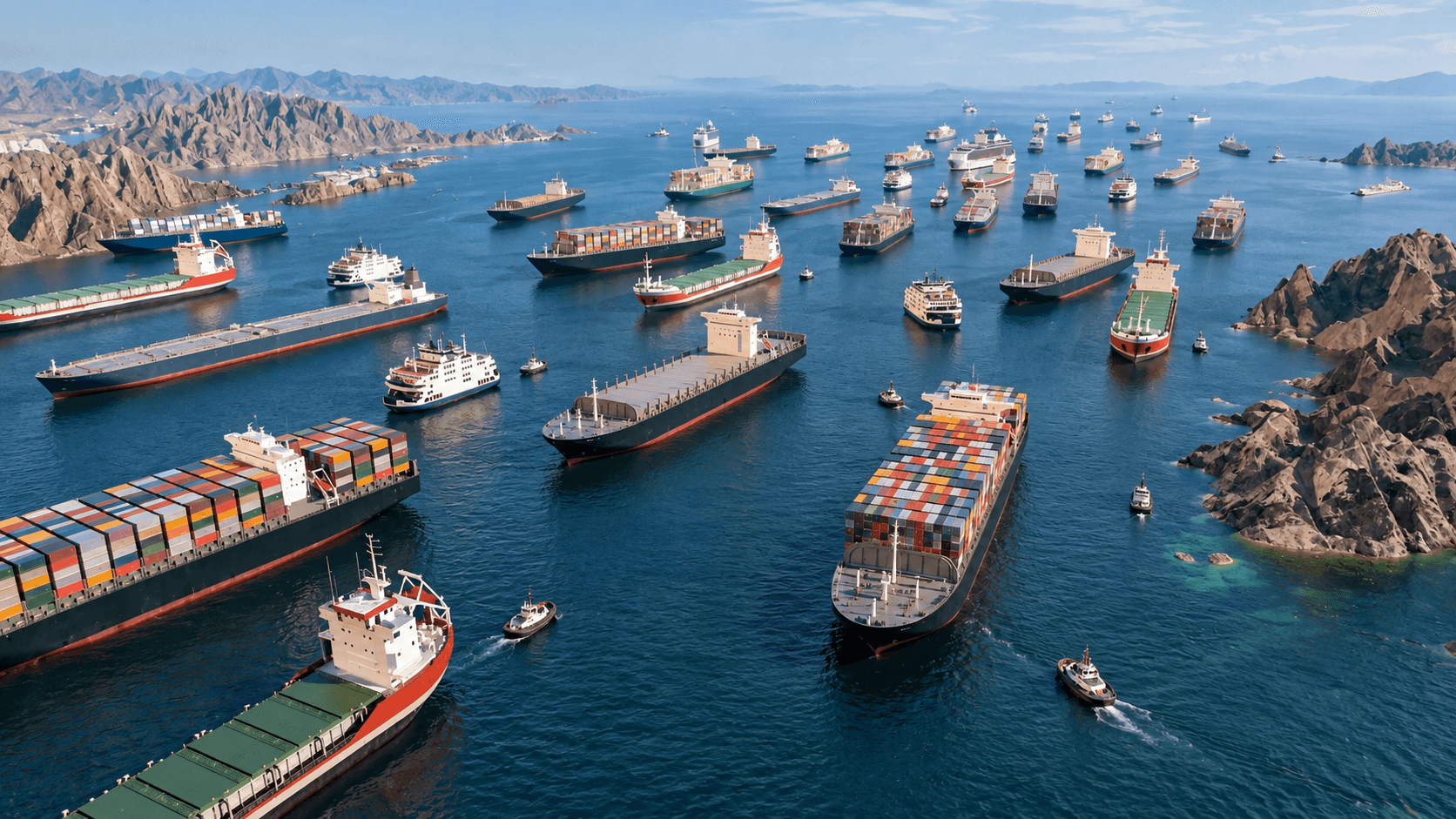
Maritime security is another concern. Houthi activity has previously raised questions about the safety of Red Sea shipping, while wider regional tensions have added uncertainty around other important Gulf routes and energy infrastructure.
When several risks emerge at the same time, the market reaction can become more pronounced, even if the effect of each individual incident remains uncertain.
Governments and refiners may respond by reviewing alternative suppliers, maintaining appropriate inventories and assessing how quickly procurement arrangements could be adjusted if shipments were delayed.
For now, the key is to distinguish between the threat of disruption and evidence that a disruption has actually occurred.
FACT CHECK METER
FACT METER: 97% — HIGH CONFIDENCE IN THE REPORTED INCIDENT AND HOUTHI THREATS
Status: The central claims are supported by reporting attributed to the Associated Press, Reuters and other news organisations, alongside Saudi authorities’ statements about the fire. The percentage reflects the assessment presented in this report, not an independently calculated statistical probability.
Confirmed details:
Saudi authorities reported a strike on an Aramco administrative building in Dhahran and described a limited fire. No casualties were reported at the building.
Associated Press reporting cited regional officials who said senior executives’ offices had been damaged, including an office associated with Aramco’s chief executive.
The Houthis claimed attacks against Aramco facilities and threatened further strikes against Saudi oil installations and airports.
Reports indicated that oil production continued after the Dhahran incident, although some employees were reportedly advised to work remotely and certain functions were moved elsewhere.
Important distinctions:
Reports of extensive damage inside executive offices differ from the authorities’ initial description of a limited fire. These accounts address different aspects of the incident and should not automatically be treated as contradictory.
No casualties were reported at the Aramco building. That does not establish that there were no injuries elsewhere during the wider series of attacks.
Damage to the headquarters does not, by itself, prove that Saudi oil production or exports were interrupted.
The Houthis’ threats of further attacks indicate their stated intentions; they do not confirm that every threatened target has been hit.
AWX VERDICT: The reported strike marks a serious escalation because it brings the conflict directly to the headquarters of Saudi Arabia’s national oil company. The immediate impact on production remained unconfirmed in the available reporting, but threats against additional energy infrastructure are increasing security concerns and uncertainty across oil markets.
WHAT TO WATCH NEXT
Aramco’s operational update: Whether the company provides further details about the damage, employee arrangements or any effect on business continuity.
Further Houthi attacks: Whether the group carries out its threats against oil facilities, airports or other Saudi infrastructure.
Saudi Arabia’s response: Whether Riyadh and the Saudi-led coalition expand military operations against Houthi-held sites in Yemen.
Oil prices and export schedules: Whether market movements are followed by evidence of production losses, shipment delays or reduced crude availability.
Energy infrastructure security: Whether Saudi authorities introduce additional protective measures at refineries, processing plants, pipelines and export terminals.
Regional escalation: Whether the confrontation remains focused on Saudi Arabia and Yemen or creates wider disruption to Gulf energy supplies and transport networks.
THE AWX BOTTOM LINE
The reported strike on Saudi Aramco’s Dhahran headquarters is a warning that the conflict is reaching increasingly sensitive parts of Saudi Arabia’s energy sector.
Offices used by senior executives were reportedly damaged, but no casualties were reported at the building. The available reports also did not confirm an interruption to oil production. That distinction is essential when assessing the immediate economic impact.
The bigger concern is what happens next. The Houthis have threatened further attacks on Saudi oil facilities and airports, while Saudi-led forces have continued strikes against Houthi-held targets in Yemen. More exchanges could increase the risks facing energy infrastructure, workers and civilian communities.
For global oil markets, the decisive question is whether the violence begins to affect the physical flow of crude. Until there is clearer evidence, the incident is best understood as a serious security escalation with potentially significant market consequences—not proof of a confirmed disruption to Saudi oil supplies.
ATTLAS WIRE | AWX WORLD NEWS
Real Stories. Lasting Impact.


Comments
No comments yet.