

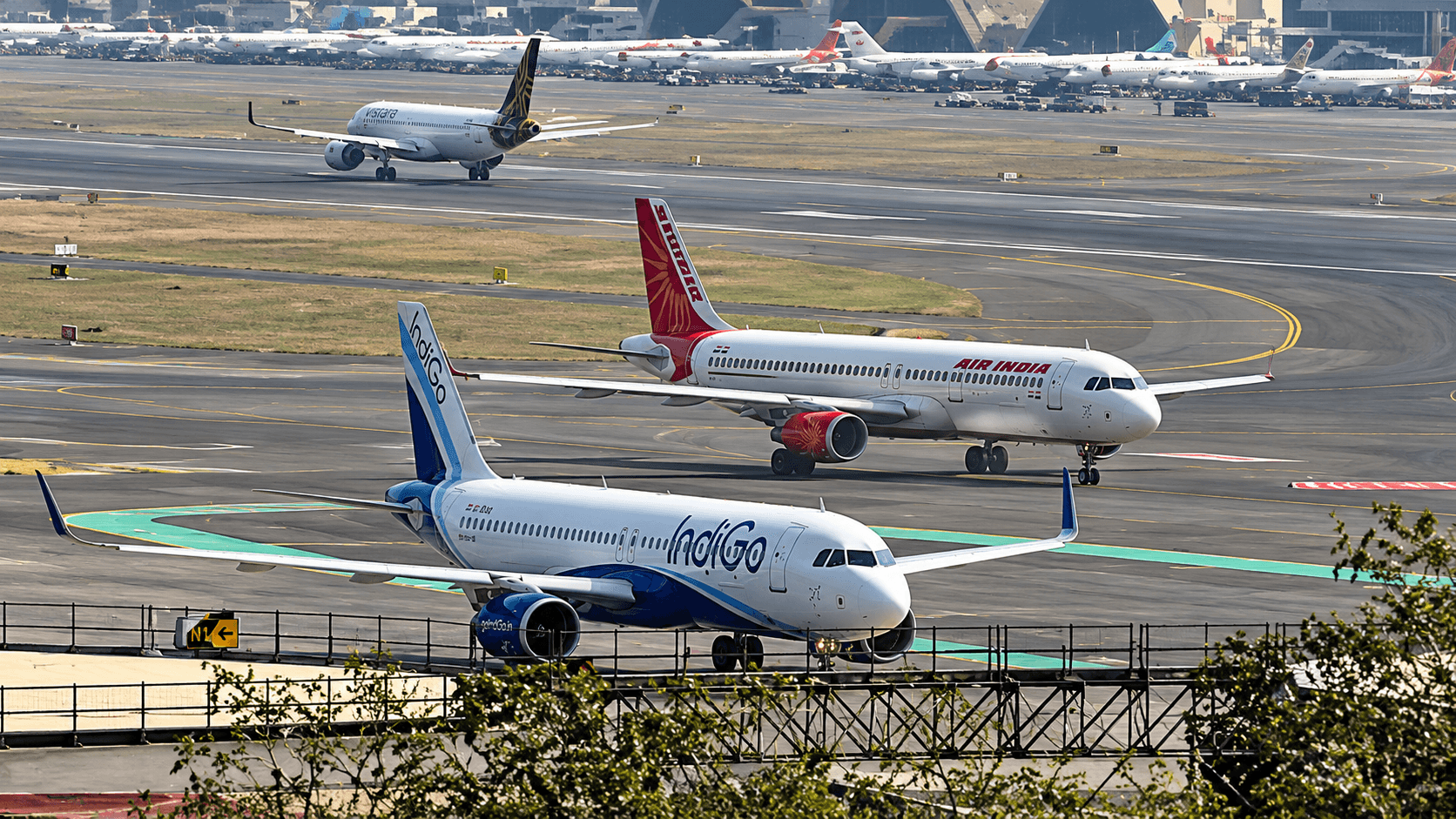
Travel between India and Saudi Arabia has been thrown into uncertainty after Air India, IndiGo, Akasa Air and Air India Express suspended services on affected routes until 17 October. The decision follows heightened security concerns after attacks on Saudi airports, leaving passengers scrambling to check bookings, arrange refunds and work out alternative travel plans.
The cancellations are affecting people travelling for work, business, family visits and Umrah pilgrimage. For many, the disruption means more than a change of schedule. It could also mean additional hotel costs, missed connections and delays to carefully planned trips.
The situation has become more serious following attacks involving Riyadh’s King Khalid International Airport. A strike on 10 October reportedly killed at least 12 people and injured more than 300. The reported death toll later rose to 13. Another attack the following day killed one person and injured 11, adding to concerns about the safety of airport operations.
Saudi authorities have extended the closure of King Khalid International Airport until 21:00 GMT on 17 October, according to a notice cited by Reuters. The restrictions have also affected international airlines, highlighting how security problems at a major airport can quickly disrupt travel across several countries.
The four Indian carriers have not cancelled exactly the same routes. Air India and Air India Express have suspended services to and from Riyadh, Dammam and Jeddah. IndiGo has also suspended flights involving Madinah, while Akasa Air has halted services to Riyadh and Jeddah.
For passengers, the immediate priority is to check their individual flight status and follow instructions from their airline before heading to the airport. Airlines, meanwhile, must weigh the pressure to keep services running against the need to protect passengers and crew.
FOUR INDIAN AIRLINES ADJUST THEIR SAUDI OPERATIONS
The suspensions affect several important air links between India and Saudi Arabia. These routes serve business travellers, Indian expatriate workers, families visiting relatives and people travelling for religious purposes.
Air India has extended cancellations affecting Riyadh, Dammam and Jeddah until 17 October. The airline is monitoring developments and assessing when it can safely resume operations. Affected passengers have been offered full refunds if they choose to cancel their bookings.
Air India Express has also suspended flights to and from Riyadh, Dammam and Jeddah through 17 October. Passengers affected by the cancellations can opt for complimentary rescheduling or a full refund under the arrangements announced by the airline.
IndiGo has suspended services involving Riyadh, Jeddah, Dammam and Madinah until 17 October, according to published reports and the Indian Embassy’s travel advisory. The cancellations affect both major commercial destinations and routes used by religious travellers.
Akasa Air has suspended flights to and from Riyadh and Jeddah over the same period. Its affected routes differ from those of the other carriers, making it particularly important for passengers to check the status of their specific flight.
The airlines have taken these steps in response to the changing security situation and operational restrictions. Decisions about resuming flights depend on airport access, official notices, airspace conditions and assessments of the risks to passengers and crew.
Although 17 October is the stated end of the current suspension period, it does not guarantee that every route will return to normal immediately. Further cancellations, extensions or a gradual resumption of services remain possible.
RIYADH AIRPORT CLOSURE ADDS TO TRAVEL DISRUPTION
King Khalid International Airport is a major gateway to Saudi Arabia’s capital and an important part of the country’s international air network. Its closure has forced airlines to remove scheduled services from their timetables and reconsider how they operate their wider networks.
The restrictions followed repeated attacks on the airport during the week. The 10 October strike caused mass casualties, while another attack on 11 October resulted in a further death and additional injuries. The incidents prompted fresh safety assessments and an extended shutdown.
For airlines, closing an airport affects more than the flights scheduled to land there. Aircraft may be stranded away from their next destinations, crew schedules can be disrupted, and passengers may lose connecting services. A cancellation in one city can therefore create delays across several other routes.
The disruption is not limited to Indian airlines. Reuters has reported that international carriers, including Lufthansa, Air France-KLM, Etihad Airways, Gulf Air, Malaysia Airlines, Philippine Airlines and Qatar Airways, have also cancelled, suspended or adjusted services involving Saudi Arabia. The precise restrictions vary by airline and destination.
This broader response shows that the problem extends beyond travel between India and Saudi Arabia. Airlines are reassessing their operations as they respond to a security situation that could change quickly.
However, the closure of Riyadh airport should not be confused with a blanket shutdown of every Saudi airport. Services involving Jeddah, Dammam and Madinah are subject to their own operational conditions and airline decisions. Passengers need to check the status of their particular route rather than assume that all airports are operating under identical restrictions.
PASSENGERS FACE CANCELLED FLIGHTS AND UNCERTAIN PLANS
For travellers with confirmed bookings, the suspensions have created immediate practical difficulties. Some may need to postpone their journeys, request refunds or look for alternative routes. Others could find themselves stranded if a connecting flight has been cancelled or their onward travel depends on a disrupted service.
The impact is particularly significant for Indian nationals who regularly travel between the two countries for employment, business, family visits and religious pilgrimage. Jeddah and Madinah are important destinations for Umrah travellers, while Riyadh and Dammam serve major business centres and large expatriate communities.
Passengers can take several steps to avoid unnecessary complications:
Check the latest flight status: Use the airline’s official website, app or customer-service channel before leaving for the airport.
Understand refund and rebooking options: Eligibility and procedures can vary by airline, booking channel and ticket type. Follow the instructions issued for the affected flight.
Contact the original booking provider: Passengers who booked through a travel agent or tour operator should coordinate changes through that provider.
Check alternative routes carefully: Travelling through another country may involve visa or transit requirements, and connecting flights could face their own disruptions.
Keep all travel records: Save booking confirmations, cancellation notices, receipts and airline communications in case they are needed for refund or reimbursement claims.
The Indian Embassy in Riyadh and the Consulate General of India in Jeddah have advised Indian nationals to remain in contact with airlines and verify flight information before travelling. The consulate has also urged Umrah pilgrims to coordinate with tour operators and service providers over rescheduling and accommodation.
Passengers should not assume that a published suspension deadline means their original flight will automatically operate on the following day. Airlines may restore services in stages, depending on security assessments and operational readiness.
INDIAN NATIONALS URGED TO FOLLOW OFFICIAL ADVISORIES
The flight cancellations come amid wider safety concerns for Indian nationals living in or travelling through Saudi Arabia.
The Indian Embassy in Riyadh has advised residents and visitors to remain vigilant, follow instructions from local authorities and avoid sharing unverified videos or reports about the attacks. The guidance is intended to help people make informed decisions while the situation remains unsettled.
The embassy has also issued updates concerning Indian citizens injured in the 10 October airport attack. Published reports said one Indian national died, while others were injured and received hospital treatment. The incident has added to the anxiety of families concerned about relatives living or travelling in the kingdom.
Indian nationals already in Saudi Arabia should follow official emergency instructions and avoid unnecessary movement during an aerial attack or security alert. Information from Saudi authorities, Indian diplomatic missions and airlines should take priority over unverified claims circulating on social media.
The embassy and consulate can provide guidance and help affected nationals identify available assistance, although alternative flights and accommodation may not be immediately available.
Employers, pilgrimage operators and travel agencies also have an important role to play. Keeping passengers informed about cancellations, revised itineraries and local arrangements can reduce confusion and help prevent unnecessary journeys to disrupted airports.
ECONOMIC COST OF DISRUPTED INDIA–SAUDI AIR LINKS
India and Saudi Arabia have extensive commercial, employment and family connections. Air travel supports business meetings, tourism, labour mobility, family visits and religious journeys. A suspension lasting a few days may have a limited long-term economic impact, but a prolonged disruption could increase costs for airlines, businesses and travellers.
Airlines must manage refunds, rebooking requests, cancelled departures and changes to aircraft and crew schedules. Passengers may face additional accommodation and transport expenses, while businesses could be forced to postpone meetings or rearrange employee travel.
Umrah operators face a different set of challenges. Pilgrimage packages often combine flights, hotel reservations, local transport and group schedules. When a flight is cancelled, changing one part of the itinerary can affect the entire trip.
The overall impact will depend on how long the restrictions remain in place and whether passengers can be accommodated on alternative services. A short suspension followed by a gradual return to normal operations would have very different consequences from repeated extensions or a prolonged reduction in flight capacity.
The disruption also illustrates how security developments can affect aviation even when an airline is not directly involved in a conflict. Carriers must respond to airport closures, official operating notices and changing risk assessments to protect their passengers and staff.
WHAT HAPPENS AFTER 17 OCTOBER?
The next important milestone is the planned end of the current suspension period. Saudi authorities and airlines will need to determine whether airport operations can resume safely and whether the existing restrictions can be lifted.
The return to normal service may not happen at the same time across all routes. Flights to Riyadh depend directly on the reopening of King Khalid International Airport, while services to Jeddah, Dammam and Madinah may be governed by separate operational assessments and airline decisions.
Carriers will also need to reorganise aircraft and crew schedules and accommodate passengers whose original bookings were cancelled. Even if services resume, restoring normal timetables could take time.
Passengers should watch for three key updates: official notices about airport operations, airline announcements confirming the resumption of individual routes, and revised instructions for affected bookings.
If the security situation deteriorates or authorities extend the restrictions, airlines may continue cancelling flights beyond 17 October. If conditions improve, some services could resume earlier or return in stages, depending on the route.
For now, the date provides a reference point for travel planning, not a guarantee that all services will restart at once.
FACT CHECK METER
FACT METER: 98% — HIGH CONFIDENCE IN THE REPORTED FLIGHT SUSPENSIONS
Status: The main claims are supported by Reuters reporting, the Indian Embassy’s travel advisory and Indian media reports published on 13–14 October 2026.
Confirmed details:
Air India suspended services to and from Riyadh, Dammam and Jeddah until 17 October.
Air India Express suspended flights on the same three routes until 17 October.
IndiGo suspended services involving Riyadh, Jeddah, Dammam and Madinah until 17 October.
Akasa Air suspended services to and from Riyadh and Jeddah until 17 October.
Riyadh’s King Khalid International Airport was scheduled to remain closed until 21:00 GMT on 17 October, according to the notice cited by Reuters.
Important distinctions:
The four airlines have not suspended identical routes. Passengers should check their specific flight and destination.
The restrictions do not establish that all Saudi airports or the country's entire airspace are closed.
The 17 October deadline marks the stated end of the current suspension period, not a guarantee that all flights will resume immediately.
The cancellations reflect precautionary decisions in response to security concerns and operational restrictions. They do not mean that every affected route has been directly attacked.
AWX VERDICT: The reported suspensions represent a significant disruption to India–Saudi travel following the attacks involving Riyadh airport and the deterioration in regional security. Workers, families, business travellers and Umrah pilgrims are among those affected. The key question now is whether airport operations and security conditions improve enough for airlines to resume services safely.
WHAT TO WATCH NEXT
Riyadh airport status: Whether Saudi authorities lift the closure or extend restrictions beyond 17 October.
Airline announcements: Whether Air India, IndiGo, Akasa Air and Air India Express resume services as planned or extend cancellations.
Passenger support: Whether airlines introduce further refund, rescheduling or rebooking arrangements.
Indian diplomatic guidance: Whether the embassy and consulate issue additional safety notices or updates on assistance for Indian nationals.
Umrah travel arrangements: Whether pilgrimage operators revise flights, accommodation and transport schedules.
Regional security developments: Whether further attacks or interceptions lead to additional restrictions on aviation in Saudi Arabia or neighbouring countries.
THE AWX BOTTOM LINE
Air India, IndiGo, Akasa Air and Air India Express have suspended affected Saudi routes through 17 October, disrupting travel for thousands of passengers. The decisions come as security concerns rise following attacks involving Riyadh’s King Khalid International Airport and an extended closure of the facility.
For passengers, the priority is to confirm bookings, understand refund or rebooking options and follow official travel advisories. Anyone planning to travel should check directly with their airline rather than assume a flight will operate because it appears on an older schedule.
For the airlines, the challenge is to restore services without compromising passenger and crew safety. Whether normal travel resumes after 17 October will depend on airport operations, official restrictions and the security situation.
Until then, passengers travelling between India and Saudi Arabia will need to remain flexible and rely on verified information as events unfold.
ATTLAS WIRE | AWX WORLD NEWS
Real Stories. Lasting Impact.




Comments
No comments yet.