

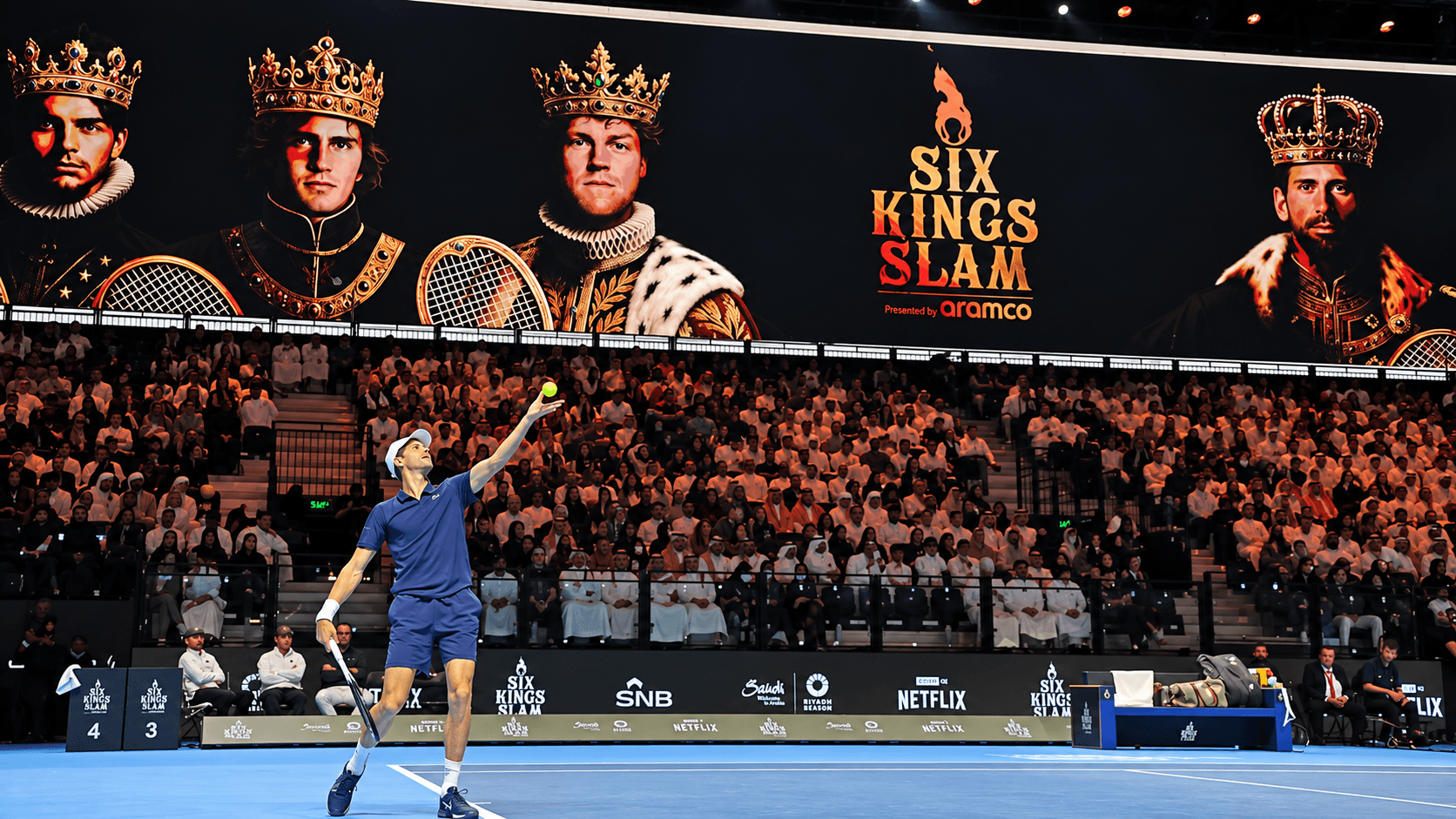
Saudi Arabia has postponed the 2026 Six Kings Slam, moving the high-profile tennis exhibition from October to December as organisers reassess the challenges of staging the event. The tournament, originally scheduled for October 21–24, will now take place from December 27–30, according to the revised schedule.
The decision comes amid heightened security concerns following deadly attacks in Riyadh, including a reported strike on King Khalid International Airport. Initial reports put the airport attack's death toll at 12, with more than 300 people injured. Subsequent reporting said the number of fatalities had risen to 13.
The postponement is a setback for one of Saudi Arabia's most prominent international sporting events. The Six Kings Slam was expected to bring several of men's tennis's biggest names to Riyadh, including Carlos Alcaraz, Novak Djokovic and Alexander Zverev.
Riyadh Season, which oversees the event, cited organisational and logistical challenges and concerns about maintaining the quality of the spectator experience. Its public announcement did not identify the airport attack as the sole reason for the change. However, contemporaneous media reports linked the decision to the deteriorating regional security situation.
The move highlights a challenge facing international sport: even when a venue remains available, instability elsewhere can disrupt the travel, security and planning arrangements needed to stage a major event.
For Saudi Arabia, the implications extend beyond tennis. The kingdom has invested heavily in international sport as part of its economic diversification strategy, using major competitions to attract visitors, expand its entertainment sector and strengthen its global profile. The latest postponement raises a difficult practical question: how can that ambition be sustained when regional instability threatens the logistics behind international events?
THE TOURNAMENT MOVES FROM OCTOBER TO DECEMBER
Riyadh Season announced on October 14 that the third edition of the Six Kings Slam would take place from December 27–30, 2026. The original schedule had included matches on October 21, 22 and 24.
Organisers said the decision followed an assessment of the logistical and organisational challenges involved in staging the competition and their potential impact on the audience experience.
The Six Kings Slam is an exhibition tournament rather than a conventional ATP Tour event. Its format brings together a small group of elite players for a commercially focused tennis showcase. That gives organisers some flexibility when adjusting the schedule, but staging an international event still requires extensive coordination.
Player travel, accommodation, practice sessions, venue operations, security, broadcasting and ticketing all need to work together. A disruption in one area can quickly affect the rest of the operation.
Moving the tournament to December gives organisers additional time to prepare. It also creates fresh scheduling considerations for players who may already have training plans, travel arrangements or other commitments near the start of the 2027 season.
For now, the event has been postponed rather than cancelled. Whether it proceeds on the revised dates will depend on the security situation, travel conditions and the completion of the necessary arrangements.
WHY THE RIYADH AIRPORT ATTACK ADDED TO THE CONCERNS
The postponement comes against the backdrop of a serious deterioration in the reported security situation in Saudi Arabia.
On October 10, an attack struck King Khalid International Airport in Riyadh. Initial reports said at least 12 people had been killed and more than 300 injured. Later reporting put the death toll at 13. Further attacks and threats against Saudi infrastructure added to concerns about the possibility of continued disruption.
The airport is a major gateway for international travellers, business visitors and sporting delegations. An incident of this scale can prompt authorities to review security procedures, restrict access and reassess flight operations.
For an international tournament, the effects can extend well beyond the airport itself. Players often travel with coaches, medical staff and other members of their support teams. Broadcasters and production crews need to transport equipment, while sponsors and spectators depend on reliable flights and accommodation.
Organisers must therefore consider more than the safety of the competition venue. They also need to assess transport routes, emergency procedures, communications, accommodation arrangements and the risk of further incidents.
The key question is whether the entire event can be delivered safely and reliably, not simply whether the tennis court is ready.
It is important, however, to distinguish between the organisers' stated explanation and the wider context. Their announcement focused on logistical and organisational difficulties. Media reports connected the postponement to regional instability, but the airport attack should not be presented as the sole officially confirmed reason.
A STAR-STUDDED FIELD FACES A CHANGED SCHEDULE
The Six Kings Slam was expected to feature a strong line-up of internationally recognised players, including Carlos Alcaraz, Novak Djokovic and Alexander Zverev. Taylor Fritz, Alex de Minaur and Learner Tien were also among the announced participants.
The player line-up is central to the event's appeal. Unlike a conventional tournament that builds its draw through rankings and qualification, the Six Kings Slam is organised around a select group of invited stars. That makes player availability particularly important to its commercial appeal.
The 2026 edition had already seen a change to its expected field. Defending champion Jannik Sinner was reported to be missing the tournament because of injury, with Learner Tien taking his place. That change was reported before the postponement was announced.
The move to late December introduces another complication. Players typically use the closing weeks of the year to manage their fitness, complete their preparation and organise travel ahead of the new season.
The revised dates also leave a relatively short window before the United Cup begins in Australia. Players planning to compete in both events may need to manage travel and recovery carefully.
That does not mean further withdrawals are inevitable. Exhibition appearances can be arranged differently from mandatory tour commitments, and each player's decision will depend on their fitness, contractual obligations and preparation plans. Still, the timing creates an additional consideration for both players and organisers.
THE BUSINESS OF SPORT FACES A NEW TEST
Saudi Arabia has made international sport an important part of its broader economic diversification plans. Major competitions can attract visitors, generate spending across hotels and restaurants, support tourism and help establish the country as a destination for international entertainment.
The Six Kings Slam fits neatly into that strategy. Its compact format and star-heavy field offer Riyadh Season an opportunity to attract global attention and showcase the kingdom's growing entertainment industry.
But postponing an event can create extra costs and administrative work. Organisers may need to renegotiate venue arrangements, adjust staffing plans, change travel bookings and revise marketing and broadcasting schedules. Sponsors may also have to reorganise campaigns, while ticket holders will want clear information about their options.
The full financial impact of the delay has not been publicly established. Without details of contractual arrangements, rescheduling costs and ticketing policies, it would be premature to attach a specific figure to the postponement.
The reputational implications are harder to measure but still matter. International sporting events rely on confidence among athletes, sponsors, broadcasters and spectators. Participants need to know that travel plans are dependable and that organisers can provide appropriate security arrangements.
Repeated disruptions could make those commitments harder to secure. At the same time, postponing an event when conditions are uncertain can demonstrate that organisers are prepared to put safety and operational readiness ahead of the original timetable.
In that sense, the decision may help protect the tournament's longer-term prospects, provided organisers can deliver a safe and well-organised event in December.
SAUDI SPORTING EVENTS FACE A BROADER SECURITY CHALLENGE
The Six Kings Slam is not the only sporting event drawing attention to the security situation in the region.
Reuters reported that the Asian Football Confederation was prepared to consider postponing the 2027 Asian Cup, scheduled to take place in Saudi Arabia, if developments made such a move necessary. At the time of that report, the tournament remained on schedule and no postponement had been announced.
The situation illustrates how regional instability can affect competitions well beyond the immediate location of an attack. International sporting events depend on transport networks, accommodation, staffing and security arrangements that can be vulnerable to events outside organisers' control.
Several factors are particularly important when assessing whether an event can proceed:
Athlete and staff safety: Players, coaches and support teams must be able to travel and work under acceptable security conditions.
Transport reliability: Airport restrictions, flight cancellations and changes to travel routes can disrupt arrivals and departures.
Venue security: Organisers need clear emergency procedures, controlled access and coordination with local authorities.
Spectator confidence: Visitors need dependable information about travel, entry arrangements and schedule changes.
Commercial continuity: Sponsors, broadcasters and service providers need enough notice to adjust their plans.
These responsibilities continue throughout the event. Security assessments must be updated as circumstances change, and contingency plans need to account for possible disruptions after the competition has started.
For international sport, the broader lesson is clear: a tournament can be well organised and still face serious challenges when the surrounding environment becomes unstable.
DECEMBER BRINGS ITS OWN SCHEDULING PRESSURE
The revised dates give organisers more time to prepare, but late December is already an important period for professional tennis players as they get ready for the new season.
The proximity of the Six Kings Slam to the United Cup and the early-January Australian swing could create additional travel and recovery demands for players heading from Riyadh to Australia. The extent of the impact will depend on each player's location, commitments and preparation plans.
The change also leaves the security question unresolved. More preparation time can help organisers strengthen arrangements, but it cannot guarantee that regional conditions will improve by the end of December.
Organisers will need to continue reviewing developments and communicating clearly with players, commercial partners and local authorities.
Fans, meanwhile, should look to official Riyadh Season and tournament announcements for updates on tickets, match schedules and player participation. Media reports about security concerns should not be treated as confirmation of operational decisions that organisers have not announced.
For Saudi Arabia, the December tournament will be another test of its ability to maintain an ambitious international sporting programme while responding to an uncertain regional environment.
The immediate priority is to deliver the event safely, with the level of organisation and experience expected by players and spectators.
FACT CHECK METER
FACT METER: 98% — HIGH CONFIDENCE ON THE POSTPONEMENT
Status: The revised schedule has been attributed to Riyadh Season and reported by Reuters, Arab News and other sports news outlets.
Confirmed details:
The 2026 Six Kings Slam was moved from its October schedule to December 27–30, 2026.
Organisers cited organisational and logistical challenges and the potential effect on the spectator experience.
Media reports linked the postponement to regional unrest and attacks in Saudi Arabia, including the reported strike on Riyadh's airport.
Carlos Alcaraz, Novak Djokovic and Alexander Zverev were among the expected participants, alongside Taylor Fritz, Alex de Minaur and Learner Tien.
The 2027 Asian Cup remained scheduled to take place in Saudi Arabia at the time of Reuters' report, although a postponement could be considered if circumstances required it.
Important distinctions:
Organisers publicly cited logistical and organisational challenges; they did not explicitly name the airport attack as the sole reason for postponement.
The tournament has been postponed, not cancelled.
The financial cost of the delay has not been established in the cited reporting.
The December dates have been announced, but the final player field and operational arrangements may still change.
AWX VERDICT: The postponement shows how regional security concerns can affect international sporting events. The Six Kings Slam remains planned for December, but its successful delivery will depend on safe travel, participant security, operational readiness and developments across the region.
WHAT TO WATCH NEXT
Official tournament updates: Whether Riyadh Season confirms ticketing arrangements, match schedules and the final programme for December 27–30.
Player participation: Whether the revised dates lead to changes in the expected field.
Security assessments: Whether authorities and organisers consider conditions suitable for the tournament to proceed.
Airline operations: Whether international travel to Riyadh becomes more reliable as security measures and flight operations evolve.
Commercial arrangements: Whether sponsors, broadcasters and hospitality partners announce changes following the postponement.
Other sporting events: Whether the regional security situation leads to schedule changes for additional competitions in Saudi Arabia or neighbouring countries.
THE AWX BOTTOM LINE
The Six Kings Slam has been moved to December 27–30, giving organisers more time to address the logistical challenges surrounding one of Riyadh's biggest sporting showcases.
The decision comes amid a deteriorating security environment, including a reported deadly attack on Riyadh's airport. However, organisers' public explanation focused on organisational and logistical difficulties rather than identifying a single cause.
The postponement underlines how vulnerable international sport can be to events far beyond the playing surface. Players, broadcasters, sponsors and spectators all depend on safe travel and reliable arrangements, and disruption to those systems can affect an entire tournament.
Saudi Arabia's wider investment in sport will not be defined by one delayed exhibition. But maintaining that ambition requires international participants and audiences to have confidence in the safety and reliability of major events.
December will provide the next test. For now, the Six Kings Slam remains on the calendar, with its eventual success depending on whether organisers can deliver the tournament safely and as planned.
ATTLAS WIRE | AWX WORLD NEWS
Real Stories. Lasting Impact.

Comments
No comments yet.