


Japan is preparing to put artificial intelligence and semiconductors at the centre of its next phase of economic growth. Prime Minister Sanae Takaichi’s government has designated the five fiscal years beginning in April 2027 as a key period for investment across 17 strategic sectors, including AI and semiconductor manufacturing.
Tokyo plans to publish an action plan by the end of 2026, outlining investment priorities, financial support and measures to strengthen domestic industries. The wider goal is to make Japanese businesses more competitive while improving the country’s access to technologies considered vital to its economic and national security.
The challenge is significant. Japan has long been a major player in semiconductor materials, manufacturing equipment, precision engineering and industrial automation. Now, it wants to build on those strengths and secure a larger role in advanced chip production and AI development.
The timing is important. Demand for computing power is climbing as businesses invest in generative AI, cloud services, robotics and data centres. At the same time, governments are increasingly treating semiconductors as strategic assets rather than simply another commercial product.
For Japan, the real test will be turning investment plans into competitive businesses, commercially successful technologies and a more resilient domestic supply chain.
A FIVE-YEAR WINDOW FOR STRATEGIC INVESTMENT
The proposed five-year push forms part of Japan’s broader economic growth strategy, which aims to encourage investment across 17 strategic sectors.
The government has set a longer-term ambition to attract approximately ¥370 trillion in combined public and private investment by fiscal 2040. AI and semiconductors are among the priorities, alongside other industries viewed as important to future growth and economic security.
It is important to understand what that figure represents. The ¥370 trillion target covers a much wider investment programme over the long term. It is not a dedicated five-year budget for AI and semiconductors alone.
Tokyo’s immediate task is to turn the broader ambition into specific projects, funding arrangements and measurable goals.
The government also wants to give businesses greater certainty when making long-term investment decisions. More predictable, multi-year funding could help companies plan factory construction, research programmes and workforce training without relying entirely on annual budget decisions.
That matters particularly in semiconductor manufacturing, where facilities cost billions to develop and can take years to reach commercial production.
Why Japan is moving now
Japan once held a much stronger position in the global semiconductor industry. Over several decades, however, its chipmakers lost ground as competitors in Taiwan, South Korea and other markets expanded their manufacturing capabilities.
The country still has considerable strengths in semiconductor materials, production equipment and specialised industrial technologies. The current AI boom offers an opportunity to build on that expertise while expanding domestic advanced-chip manufacturing.
There is also a security concern. Geopolitical tensions and the concentration of advanced chip production in a limited number of locations have exposed weaknesses in global supply chains.
A major disruption at key manufacturing centres could affect everything from automobiles and consumer electronics to telecommunications, industrial machinery and AI infrastructure.
Tokyo therefore sees domestic investment as more than an economic growth measure. It is also an effort to make Japan less vulnerable to external shocks.
JAPAN WANTS A BIGGER SHARE OF THE CHIP MARKET
Japan’s semiconductor ambitions extend well beyond the proposed five-year investment period.
In March 2026, the country set a target of raising annual sales of domestically produced semiconductors to ¥40 trillion by 2040, up from approximately ¥8 trillion at the time. That would represent a fivefold increase and build on an earlier target of ¥15 trillion in annual sales by 2030.
Achieving that goal will require more than expanding factory capacity. Japan will need to develop competitive technology, attract customers, strengthen supplier networks and establish a sustainable manufacturing business.
The country already has an established presence in semiconductor materials, components and production equipment. But becoming a major supplier of advanced chips requires consistent manufacturing quality, competitive costs, high production yields and the ability to deliver large volumes reliably.
Just as importantly, manufacturers need customers willing to commit to long-term orders.
Those commercial challenges will be central to Japan’s efforts to rebuild its position in the industry.
Rapidus faces a crucial test
One of the most closely watched projects is Rapidus, the government-backed semiconductor company established in 2022.
Rapidus aims to manufacture advanced 2-nanometre chips in Japan, entering a market where established manufacturers have years of experience and substantial technical advantages. These chips are particularly important for high-performance computing, including increasingly powerful AI systems.
According to a Reuters report in October 2026, Rapidus was seeking customers ahead of its planned move towards mass production in the second half of fiscal 2027. The company has also been developing partnerships with chip-design businesses to improve its chances of securing manufacturing contracts.
The project has received substantial government backing, but its commercial success is far from assured.
Advanced chipmaking requires specialised equipment, highly trained workers, dependable suppliers and years of process development. Even well-funded companies can struggle to achieve the production yields and consistency needed to manufacture chips profitably.
For Rapidus, winning customers will be just as important as developing the technology. A factory that can produce advanced chips still needs enough orders to cover its operating costs and justify further investment.
If Rapidus succeeds, it could help restore Japan’s role in advanced semiconductor manufacturing. If it struggles to achieve reliable production or attract enough demand, it could become a costly setback for Tokyo’s wider industrial strategy.
AI IS ABOUT MORE THAN SOFTWARE
Japan’s strategy reflects a broader understanding of artificial intelligence: its value depends not only on software and algorithms, but also on the physical infrastructure needed to run them.
Advanced AI systems require powerful processors, memory, data storage, networking equipment and substantial amounts of electricity. As businesses bring AI into manufacturing, healthcare, logistics and robotics, access to reliable computing infrastructure will become increasingly important.
Japan hopes to use its existing industrial expertise to develop AI applications that solve practical business problems.
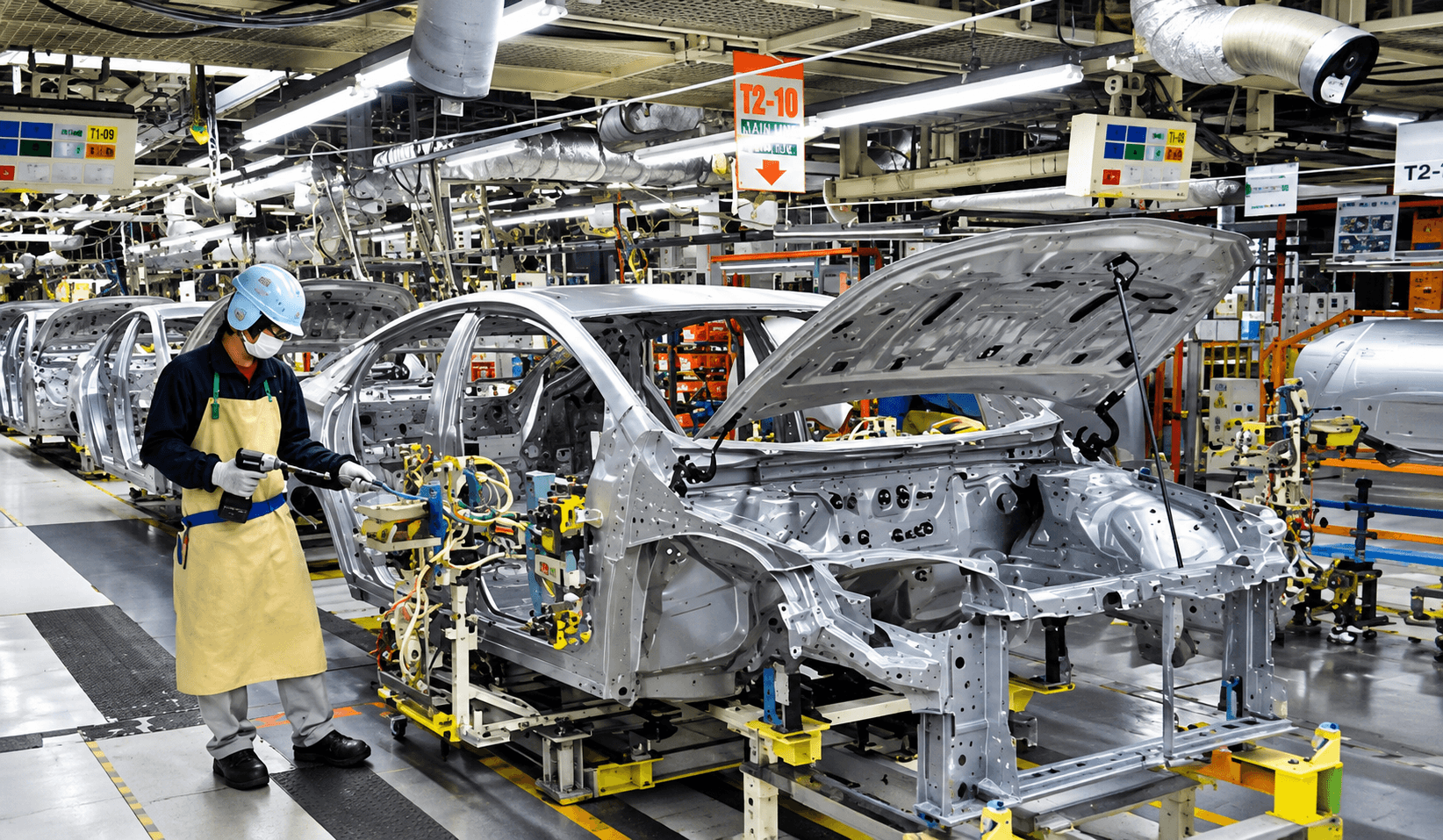
The country already has considerable experience in robotics, automation and precision manufacturing. By combining those strengths with AI, Japanese companies could improve productivity, make industrial operations more efficient and develop smarter machinery.
This could offer Japan a different path to competitiveness rather than simply trying to match the largest American and Chinese AI developers.
Its opportunity may lie in connecting AI with advanced machinery, industrial robotics and specialised business applications where Japanese companies already have strong foundations.
AI could help tackle labour shortages
Japan’s ageing population and shrinking workforce make automation an increasingly important economic priority.
Factories, logistics companies and service providers need ways to maintain output despite labour constraints. AI-powered robotics and automated systems could help manage repetitive work, improve quality control and reduce operational bottlenecks.
However, automation will not eliminate every staffing challenge. Businesses will still need people to maintain equipment, supervise AI systems, handle unexpected problems and make decisions that require human judgement.
The real measure of success will be whether these technologies deliver meaningful productivity gains rather than simply adding more complexity and expense.
Building a stronger domestic AI ecosystem
A stronger semiconductor industry could support Japan’s wider AI ambitions by improving access to computing infrastructure and encouraging closer cooperation between chipmakers, software developers, research institutions and industrial businesses.
Still, producing more chips domestically does not automatically mean lower costs or complete independence from overseas suppliers. Semiconductor manufacturing depends on international networks for equipment, materials, intellectual property and specialised components.
Japan’s aim is better understood as strengthening its strategic capabilities and reducing vulnerabilities, not eliminating all foreign dependence.
GOVERNMENT FUNDING MUST BRING PRIVATE INVESTORS ON BOARD
Japan has already pledged substantial public support for AI and semiconductor development.
In January 2026, Prime Minister Takaichi said the government would use more than ¥10 trillion in public support through its AI and semiconductor industrial infrastructure framework and related funds to encourage more than ¥50 trillion in public-private investment. The government also projected a potential economic ripple effect of approximately ¥160 trillion.
These figures relate to the government’s broader industrial policy. They should not be mistaken for confirmed funding allocations under the new five-year programme alone.
The key question is whether public money can attract additional private investment and create businesses that remain competitive without permanent government support.
State funding can help companies manage the risks of developing new technologies and encourage investment in infrastructure that private businesses might otherwise be reluctant to finance.
But subsidies cannot guarantee that a company will develop a successful product, compete on price or secure enough customers.
The risk of costly projects without enough demand
Semiconductor manufacturing is particularly vulnerable to changes in market conditions. Factories are expensive to build and operate, while the industry regularly experiences cycles of shortages, oversupply and falling prices.
If government funding supports production capacity that cannot attract sufficient orders, the financial returns for taxpayers could fall short of expectations.
AI infrastructure carries similar risks. Data centres and specialised computing facilities require substantial capital and electricity. Their commercial performance depends on customer demand, utilisation rates and operating costs.
Tokyo will need to judge projects by more than the money invested. Productivity gains, financial sustainability and improvements in domestic technological capabilities will be equally important measures.
ENERGY, TALENT AND INFRASTRUCTURE COULD HOLD JAPAN BACK
Funding alone will not determine whether the strategy succeeds. Japan must also address several practical constraints.
Reliable electricity supply
Both AI computing infrastructure and semiconductor factories need dependable power.
Data centres can consume enormous amounts of electricity, while chip factories require tightly controlled operating conditions and highly reliable utilities.
The government has identified electricity supply as an important consideration in its broader growth strategy.
If power infrastructure fails to keep pace with new investment, projects could face delays, higher costs or limits on expansion.
A shortage of specialised talent
Japan will need more people with expertise in chip design, semiconductor manufacturing, AI engineering, equipment maintenance and advanced research.
Training programmes can help expand the workforce, but developing experienced semiconductor specialists takes time. Japanese companies must also compete with international employers for skilled engineers and researchers.
The government has identified workforce development and the movement of talent into growth industries as priorities across its wider economic strategy.
Without enough qualified people, even well-funded projects could struggle to reach their production targets.
Competition from established chipmakers
Japan is entering a highly competitive market.
Taiwan’s TSMC is a leading force in advanced contract chip manufacturing, while South Korea’s Samsung and the United States’ Intel are major competitors. The United States and China are also investing heavily in semiconductor technology and AI infrastructure.
Rapidus will need to convince customers that it can deliver the right combination of performance, reliability, price and supply security.
Japan’s strengths in semiconductor materials and equipment give it a solid foundation, but regaining a larger share of advanced chip manufacturing will require sustained progress over several years.
THE GEOPOLITICAL STAKES ARE RISING
Semiconductors have become central to economic security because they underpin defence systems, communications networks, transport, industrial production and artificial intelligence.
Governments increasingly want dependable access to chips, even when international trade is disrupted by export controls, sanctions, regional tensions or natural disasters.
Japan’s investment push fits into that wider shift. Tokyo wants to strengthen its domestic technology base while continuing to work with international suppliers and strategic partners.
The objective is not simply to manufacture more chips at home. It is also to preserve capabilities that make Japan an important player in global technology supply chains.
The government sees strategic investment as a way to improve domestic resilience, strengthen international competitiveness and increase Japan’s importance in the global economy.
Finding the right balance will be difficult. Excessive dependence on foreign suppliers can leave the country exposed, but attempting to reproduce every part of the global semiconductor supply chain domestically would be expensive and impractical.
Japan’s strongest opportunity may be to focus on areas where it already has a credible technological advantage and where global demand is expected to remain strong.
WHAT SUCCESS WOULD LOOK LIKE
Japan’s five-year investment drive should ultimately be judged by results, not announcements.
In semiconductors, key indicators will include whether Rapidus meets its production milestones, secures long-term customers and achieves competitive manufacturing yields. Growth in domestic chip sales and additional private investment will also help show whether the strategy is working.
For AI, the real test will be whether businesses adopt the technology at scale and achieve measurable improvements in productivity, quality and operating costs.
Other signs of progress will include a stronger skilled workforce, better infrastructure, more competitive domestic suppliers and research that translates into commercially viable products.
The government will also need to demonstrate that public funding is generating additional investment rather than simply replacing spending companies would have made anyway.
If the strategy succeeds, Japan could strengthen its industrial base, attract international partnerships and become more resilient in strategically important technologies.
If it falls short, the country could be left with expensive facilities, ambitious targets and limited commercial returns.
FACT CHECK METER
FACT METER: 98% — GOVERNMENT STRATEGY CONFIRMED; RESULTS STILL TO BE PROVEN
STATUS: Japan has designated the five fiscal years beginning in April 2027 as an intensive investment period across 17 strategic sectors. An action plan is expected by the end of 2026. AI and semiconductors are key priorities, although the programme’s detailed funding allocations and implementation measures remain under development.
CONFIRMED DETAILS
Japan plans to publish a growth-strategy action plan by the end of 2026.
The five-year investment period is scheduled to begin in April 2027.
The broader strategy aims to attract approximately ¥370 trillion in combined public and private investment across 17 strategic sectors by fiscal 2040.
Japan has set a target of ¥40 trillion in annual sales of domestically produced semiconductors by 2040.
Rapidus is pursuing advanced chip manufacturing and must secure customers as it works towards its planned production milestones.
IMPORTANT DISTINCTIONS
The ¥370 trillion figure is a long-term investment ambition covering multiple sectors, not a dedicated five-year AI and semiconductor budget.
Projected economic benefits are estimates, not guaranteed returns.
Rapidus’s production targets do not guarantee successful commercial-scale manufacturing.
The five-year programme’s detailed funding allocations and eventual results remain to be established.
AWX VERDICT: Japan is making a serious effort to rebuild its technological capabilities and capture more of the AI-driven semiconductor opportunity. Success will depend on turning public support into competitive manufacturing, sustained private investment and practical AI adoption.
WHAT TO WATCH NEXT
The year-end action plan: Tokyo is expected to provide more details on priority projects, investment targets and budget measures by the end of 2026.
The April 2027 launch: Watch how the five-year investment period translates into actual funding and projects.
Rapidus production milestones: Progress towards advanced-chip manufacturing and new customer commitments will be a major test.
Domestic chip sales: Track progress towards the ¥40 trillion annual sales target for 2040.
Private investment: New corporate commitments will indicate whether government support is attracting additional capital.
AI adoption across industry: Look for measurable productivity gains in manufacturing, logistics, robotics and other business applications.
Power and infrastructure: Electricity supply, data-centre capacity and factory infrastructure could determine how quickly projects expand.
Workforce development: The availability of engineers, researchers and manufacturing specialists will influence how quickly Japan can scale up.
Global competition: Established chipmakers and rival industrial policies will shape Japan’s ability to attract customers.
THE AWX BOTTOM LINE
Japan is betting that artificial intelligence and semiconductors will play a defining role in the next generation of economic growth and national security. The five-year investment drive beginning in April 2027 is intended to give that effort greater direction, backed by ambitious long-term targets for investment and domestic chip sales.
The opportunity is substantial, but so are the challenges. Japan must compete with established chipmakers, attract private capital, develop a skilled workforce and ensure that its technology investments can stand on their own commercially.
Rapidus will be an important test of whether government support can help rebuild advanced manufacturing capacity. The wider adoption of AI across Japanese industry will provide another measure of whether the strategy delivers meaningful productivity gains.
Tokyo has laid out its ambitions. The real test begins when those plans have to deliver results.
ATTLAS WIRE | AWX WORLD NEWS
Real Stories. Lasting Impact.



Comments
No comments yet.