
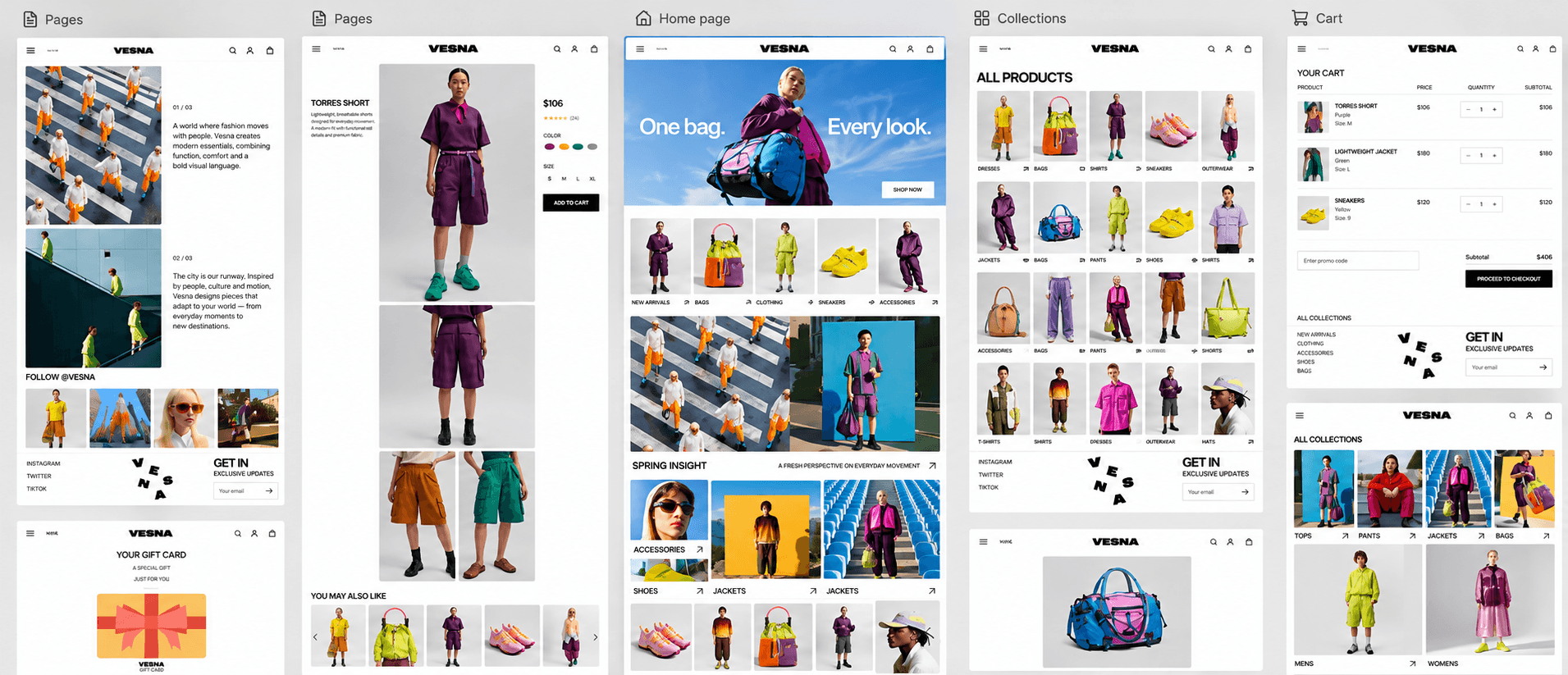
Building an online store could soon feel less like a technical project and more like a conversation. Shopify is moving in that direction with Canvas, an AI-powered design workspace introduced on 1 October that allows merchants to create and customise storefronts using its Sidekick assistant.
Rather than spending hours navigating theme editors, adjusting page sections or hiring a developer for every small change, merchants can describe what they have in mind using everyday language. Canvas helps turn those instructions into design changes, while a live visual workspace lets users see how their store is taking shape.
The idea is simple: business owners should be able to bring their vision to life without first learning how to code.
For Shopify, the launch is another step towards making AI part of everyday e-commerce operations. For small businesses and first-time sellers, it could make getting an online store up and running less intimidating.
There is a catch, though. Building a website is only one part of running an online business. Merchants still need to manage products, configure payments, handle customer service, organise deliveries and attract buyers.
WHAT HAS SHOPIFY INTRODUCED?
Canvas gives merchants a new way to design their Shopify storefronts with help from Sidekick, the company's AI assistant.
Until now, most merchants have relied on Shopify's visual theme editor to rearrange sections, adjust settings and customise their websites. That approach works for many businesses, but creating a more distinctive design can require extra technical knowledge or help from a developer.
Canvas aims to make that process more flexible. Instead of working through menus and settings one by one, merchants can explain what they want, ask Sidekick to make changes and review the results as they appear.
Shopify says the workspace lets users move between pages, zoom in on specific details and work with Sidekick as their storefront develops. It also works with the underlying store files rather than simply generating a static design mock-up.
That difference is important. A website might look attractive in a design preview, but a real store needs working navigation, functional product pages and layouts that behave properly across devices. Being able to inspect the developing storefront gives merchants a more practical way to judge whether the changes are working.
The launch also reflects a wider shift across the website-building industry. AI tools are increasingly helping people generate layouts, write content, create visual assets and customise websites through simple instructions.
Shopify's advantage is that Canvas sits inside an established commerce platform, where merchants already manage products, orders, payments and other business activities.
HOW CANVAS AND SIDEKICK WORK TOGETHER
From a simple instruction to a store design
The process starts with an idea.
A clothing retailer might ask for a clean, modern storefront with a particular colour palette. Another merchant might want larger product images, a simpler homepage or a product page that makes key information easier to find.
Sidekick helps translate those requests into changes, while Canvas gives the merchant a visual space to review the result. Users can then ask for further adjustments or fine-tune individual elements themselves.
This makes website design more conversational and iterative. Rather than understanding every technical setting before getting started, merchants can begin with a rough idea and improve it step by step.
That could be particularly useful for solo entrepreneurs, small retailers and first-time sellers who cannot afford a dedicated design team.
More than a visual preview
One of the key points in Shopify's announcement is that Canvas works with the store's underlying code and files. Merchants can therefore inspect the developing storefront instead of relying entirely on a static concept.
This could help them spot design problems earlier and make changes without constantly switching between a mock-up and a separate development process.
However, AI-generated changes are not automatically correct. Merchants still need to check the finished website, review its content and test the steps customers take before making a purchase.
Useful, but not a complete replacement for developers
Canvas also launched with some limitations.
According to TechCrunch's reporting, the initial version did not support certain third-party themes, app blocks and extensions, markets, translations and theme updates. It was also available only on desktop at launch. Shopify indicated that some capabilities could expand over time.
These gaps matter for established retailers that rely on complex integrations, multiple languages, regional pricing or specialised applications.
A small business with a straightforward storefront might find AI-assisted design sufficient for many everyday changes. A retailer with complex inventory systems, custom checkout requirements or extensive integrations may still need professional development support.
WHY SHOPIFY IS BETTING ON AI DESIGN
Shopify operates in a competitive market where ease of use can make a real difference. Businesses can choose from hosted commerce platforms, traditional website builders, open-source tools and newer AI-powered services.
Canvas gives Shopify another way to stand out. Instead of expecting merchants to master a design editor, it lets them start by explaining the outcome they want.
There are three main reasons this approach matters.
1. Making it easier to start an online business
Creating a professional storefront involves more than picking a template. Merchants need to organise pages, write product descriptions, choose images and make sure the design works across different screen sizes.
For someone without technical experience, those tasks can quickly become overwhelming.
AI-assisted design could reduce the amount of manual work needed to get an initial store ready. It may also help small businesses experiment with different layouts without paying for extensive development work every time they want to make a change.
Still, an easier website-building process does not guarantee a successful business. Merchants need products people want, a clear target audience, dependable fulfilment and an effective way to reach customers.
2. Keeping merchants within Shopify's ecosystem
An online store is more than a collection of web pages. It is also where businesses manage products, payments, orders, customers and day-to-day operations.
By bringing conversational design directly into its platform, Shopify can make AI assistance part of the merchant's regular workflow rather than a separate service.
Sidekick already supports tasks such as generating content, analysing store information, editing products and helping with administrative work. Shopify also advises merchants to review AI-generated results before applying changes.
As these tools become more useful, merchants may have more reasons to manage their businesses within Shopify's ecosystem.
3. Preparing for the next phase of AI-powered commerce
AI is changing both sides of online shopping. Businesses are exploring ways to build and manage stores more efficiently, while customers are increasingly encountering AI-assisted product discovery and shopping experiences.
In a January 2026 announcement, Shopify discussed its work on agentic commerce, including integrations intended to help merchants reach customers through AI-driven experiences.
Canvas focuses on the merchant side of that shift by making storefront creation and customisation more accessible.
Together, these developments suggest that Shopify sees AI as more than a tool for writing product descriptions. The company is exploring how conversational interfaces could become part of both running a business and discovering products online.
WHAT CANVAS COULD MEAN FOR SMALL BUSINESSES
For a small retailer, a website is often the first interaction a potential customer has with the business. It needs to explain what is being sold, build confidence and make buying as straightforward as possible.
AI-assisted design could help business owners move from an initial idea to a working storefront more quickly. It could also make experimentation less expensive and time-consuming.
A merchant might want to test a different homepage layout, change how products are displayed or make important information easier to find. With AI assistance, some of those adjustments could become simpler to carry out.
But there are several things business owners should keep in mind.
Design still requires judgement. A layout may look polished without reflecting the brand or helping customers navigate the store.
Product information must be accurate. Descriptions, specifications, prices and promotional claims need to be checked before publication.
The shopping experience needs testing. Broken links, confusing navigation and mobile display problems can frustrate customers, even when a site looks attractive.
Business costs remain. Subscriptions, payment processing, applications, inventory, fulfilment and advertising can all add to the cost of operating an online store.
The real opportunity is not to make running an e-commerce business effortless. It is to reduce the time and technical knowledge needed to build and improve the storefront.
WHAT THIS MEANS FOR WEB DEVELOPERS AND DESIGNERS
Tools like Canvas could change the kind of work businesses expect from web professionals.
Routine tasks such as adjusting colours, rearranging page sections and generating basic content may increasingly be handled with AI assistance. That could put pressure on some straightforward, template-based website projects.
But professional web development goes well beyond building a homepage.
Businesses still need specialists who can develop custom features, improve performance, address accessibility issues, connect external systems, manage data flows and troubleshoot complicated technical problems.
The role of developers may therefore shift towards guiding AI-generated work, reviewing code, resolving errors and building functionality that automated tools cannot reliably handle on their own.
For freelancers and agencies, the challenge will be to use AI to work more efficiently while continuing to offer expertise that goes beyond basic website creation.
A store can be generated quickly and still have serious problems. Someone must be able to investigate difficult bugs, protect sensitive information and make sure the website works reliably under real-world conditions.
THE RISKS: FASTER DESIGN DOESN'T GUARANTEE BETTER RESULTS
AI-generated websites bring familiar concerns about accuracy, consistency and control.
An assistant might misunderstand an instruction, change something the merchant wanted to keep or generate product information that is incorrect. Theme changes can also affect other parts of a store, especially when specialised applications or custom functionality are involved.
Shopify's own guidance warns that AI-generated outputs can contain errors and recommends reviewing proposed changes before applying them.
Merchants should retain control over publishing decisions and test important customer journeys before making changes live.
They also need to consider accessibility, page speed, search-engine optimisation and mobile usability. A store that looks good but loads slowly, is difficult to navigate or performs poorly on mobile devices can lose potential customers.
Data access deserves attention, too. When AI tools connect to a store, businesses should understand which information those integrations can access and avoid granting permissions they do not need.
Convenience is valuable, but it should not come at the expense of security, accuracy or control.
THE COMPETITIVE LANDSCAPE
Shopify is not alone in making website creation more conversational. AI-powered builders and coding platforms are allowing users to generate websites from written descriptions, while established website-building services continue to add AI features.
That means the ability to create a page using AI may not remain a major competitive advantage for long.
The bigger question is how well the technology works within a complete e-commerce environment.
Shopify already offers tools for managing products, payments and orders. Canvas could benefit from that integration, but merchants will ultimately judge it on practical results: Does it follow instructions accurately? Does it save time? Does it support the features they need? Can they maintain the site easily after launch?
The limitations in the initial release also show why it is too early to treat conversational design as a universal replacement for traditional development workflows.
Canvas could become more capable as Shopify expands it. Its long-term value, however, will depend on how reliably it works and how well it supports the needs of different businesses.
FACT CHECK METER
FACT METER: 97% — CORE ANNOUNCEMENT REPORTED; LONG-TERM IMPACT REMAINS UNCERTAIN
Status: Shopify announced Canvas on 1 October 2026 as an AI-assisted design workspace that lets merchants work with Sidekick through conversational instructions while viewing and refining their storefront.
CONFIRMED DETAILS
Canvas introduces a conversational approach to Shopify storefront design.
The tool works with Sidekick, Shopify's AI assistant.
Merchants can review and refine their developing storefront in a visual workspace.
Shopify offers other AI tools for store management and content creation.
The initial release had limitations, including desktop-only access and gaps in support for certain themes and extensions.
IMPORTANT DISTINCTIONS
AI-assisted design does not mean every business can launch a complete, reliable online operation without additional work.
The availability of Canvas does not establish how much time or money every merchant will save.
Claims that AI will eliminate the need for web developers remain predictions, not established outcomes.
Additional integrations and advanced features should not be assumed available unless Shopify confirms them.
AWX VERDICT: Canvas is a concrete step towards making e-commerce design more accessible through conversation. Its potential lies in simplifying storefront creation and customisation, but its commercial impact will depend on reliability, feature coverage and the quality of the websites merchants ultimately publish.
WHAT TO WATCH NEXT
Wider availability: Watch for updates to Canvas access and the introduction of additional capabilities.
Theme and app compatibility: Better support for third-party themes, extensions and complex store setups could make Canvas more useful to established retailers.
Mobile support: Expanding beyond desktop would give merchants more flexibility when working on their stores.
Merchant adoption: The range of businesses using conversational design will help show whether Canvas solves a meaningful problem.
The developer response: Agencies and freelancers may increasingly combine AI-assisted production with custom engineering and quality checks.
AI shopping integration: Shopify's wider work on conversational commerce could connect easier store creation with new ways for customers to discover and buy products.
Quality and security: Merchants will need to ensure AI-generated changes preserve accurate product information, accessibility and reliable checkout experiences.
THE AWX BOTTOM LINE
Shopify wants building an online store to feel more like having a conversation than learning a technical system. With Canvas, merchants can describe the storefront they want and use Sidekick to help turn that idea into a working design.
The approach could make it easier for entrepreneurs to get started without immediately paying for specialist development. It could also change how web designers and developers handle routine storefront work.
But a website is only the starting point. A successful online business still needs accurate information, a smooth customer experience, reliable operations and products people actually want to buy.
Shopify is making store design more conversational. Whether that leads to better businesses will depend on what merchants build with it.
ATTLAS WIRE | AWX WORLD NEWS
Real Stories. Lasting Impact.




Comments
No comments yet.