
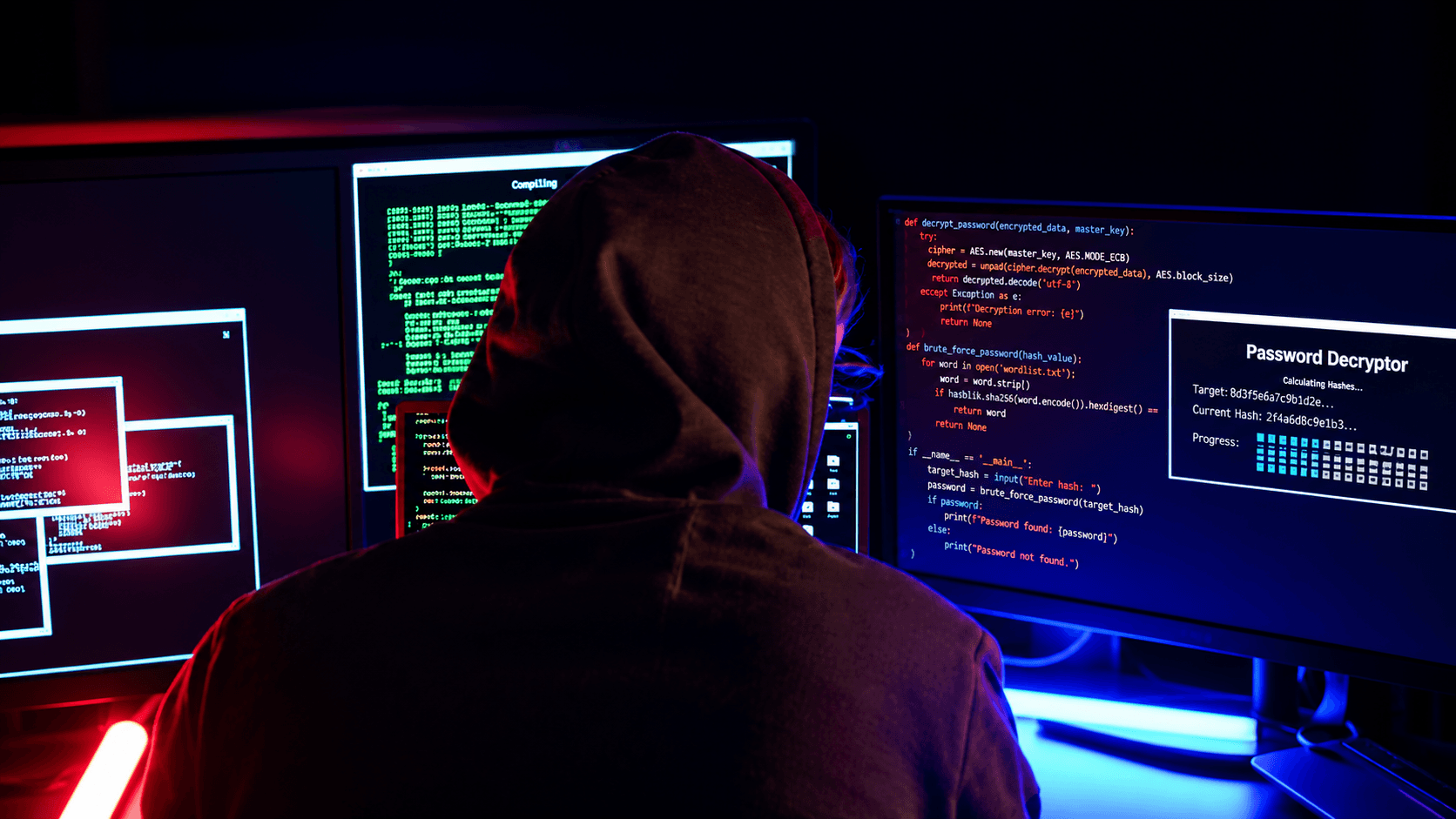
Cybersecurity researchers have uncovered a targeted phishing campaign aimed at people working on artificial intelligence policy, national security and technology export controls. The attackers allegedly posed as former US government officials, prominent policy experts and an AI industry figure to build trust with their targets before attempting to steal their login credentials.
Rather than relying on obviously suspicious emails or malicious attachments, the campaign reportedly began with professional-looking messages about AI policy discussions, advisory committees and research projects. The approach was designed to make the contact appear legitimate, particularly to experts who regularly receive invitations to participate in policy consultations and industry discussions.
Cybersecurity firm Proofpoint documented the activity and linked it to a China-aligned threat group it tracks as TA419. Reuters also reported on the campaign on 1 October. The researchers described an operation in which attackers used the identities of real people to make their messages more convincing before directing recipients to fraudulent sign-in pages.
The choice of targets is significant. These were not simply AI developers or engineers. The campaign also focused on people whose work could provide insight into government policy, defence priorities, technology restrictions and international debates over AI governance.
There is, however, an important distinction between attempting to steal credentials and successfully accessing someone's account. Public reporting has not established that every intended victim was compromised or that the attackers obtained confidential policy documents.
HOW THE ATTACKERS BUILT TRUST
Proofpoint traced a prominent phase of the campaign to July 2026. During this period, the attackers reportedly impersonated people with established reputations in government, economics and AI policy to initiate conversations with selected experts.
Among those impersonated were Lynne Edwards Parker, a former senior official in the White House Office of Science and Technology Policy, and Heidi Crebo-Rediker, an economist and foreign policy specialist who previously held a senior position at the US State Department.
The messages referred to opportunities that would not necessarily raise immediate suspicion. Some recipients were invited to join a purported “AI Policy Advisory Committee”, while others received messages about a supposed Senate Foreign Relations Committee report on AI export controls and supply chains.
For researchers accustomed to professional invitations, the messages could have seemed entirely plausible. An email appearing to come from a former government official or a recognised policy expert might not attract the same suspicion as an unsolicited message from an unfamiliar sender.
The attackers reportedly waited until recipients responded before sending shortened links. Those links passed through several stages before leading to fraudulent Microsoft sign-in pages designed to collect account credentials.
This staged approach is one of the campaign's most concerning features. The initial message did not necessarily need to contain an obvious malicious link. Instead, the attackers attempted to establish credibility first and introduce the credential-theft mechanism later.
It is a reminder that modern phishing attacks can look like ordinary professional correspondence. Relevant subject matter, familiar names and convincing language can make a fraudulent message difficult to distinguish from a legitimate one.
WHY AI POLICY EXPERTS WERE TARGETED
The selection of targets suggests that the attackers were interested in the wider strategic debate surrounding artificial intelligence, not just the technology itself.
AI policy experts often work on issues that governments consider increasingly sensitive, including restrictions on advanced AI systems, military applications, semiconductor supply chains, export controls and international technology standards.
Their professional accounts may also contain unpublished research, internal assessments, meeting notes and correspondence with government officials or technology companies. Even when an individual does not have access to classified material, their communications could reveal how influential organisations are approaching future policy decisions.
Proofpoint assessed that the targeting was consistent with broader intelligence-gathering interests related to US AI policy. The company has also described TA419 as having a history of targeting organisations and individuals connected to defence, national security, energy, international relations and foreign policy.
That assessment does not establish that the attackers were pursuing a particular government secret or that the campaign successfully collected intelligence. It reflects the researchers' analysis of the group's targeting patterns, methods and infrastructure.
Nevertheless, access to a researcher's account could provide more than a collection of emails. An attacker might be able to identify important contacts, follow ongoing discussions, monitor upcoming meetings or use the compromised account to approach other experts.
In some cases, the professional network surrounding a target may be just as valuable as the information stored in the account itself.
INSIDE THE FAKE SIGN-IN PROCESS
The campaign reportedly used techniques more sophisticated than simply copying the appearance of a login page.
According to Proofpoint, the attackers used a customised credential-phishing process associated with adversary-in-the-middle phishing. In this type of attack, a fraudulent intermediary relays parts of the authentication process between a victim and a legitimate service while attempting to capture login credentials or authentication-session information.
Researchers also identified a technique known as “browser-in-the-browser” phishing. This involves creating a fake sign-in window inside an ordinary browser window, making the fraudulent interface resemble a legitimate authentication pop-up.
The goal is to exploit a familiar habit: people often judge a login request by how it looks and the context in which it appears. A Microsoft-style prompt arriving after a seemingly legitimate invitation to review a document may not immediately seem suspicious.
Why multi-factor authentication is not always enough
Multi-factor authentication remains an important defence against account theft, but it does not stop every phishing technique.
Some attacks can relay a user's authentication process and attempt to capture an authenticated session. In such cases, a one-time code or an approval request may not provide sufficient protection if the attacker can misuse the resulting session.
Security teams are therefore encouraged to adopt phishing-resistant authentication methods, such as passkeys and hardware security keys, where appropriate. Monitoring account activity and protecting authentication sessions are also important.
The lesson is not that multi-factor authentication has become ineffective. Rather, organisations need multiple layers of protection and authentication methods suited to the threats they face.
A CAMPAIGN WITH A LONGER HISTORY
The reported activity appears to be part of a broader pattern rather than an isolated incident.
Proofpoint said TA419 had been conducting credential-phishing campaigns against people associated with US- and Japan-based think tanks, defence contractors, universities and law firms since at least April 2025.
In February 2026, the group reportedly impersonated a senior Anthropic employee in an email targeting an AI policy analyst at a US think tank. The message carried the subject line “Request for Feedback on Military Integration of Claude”, referring to debates about the use of AI systems in military settings.
The subject was tailored to the recipient's area of work. For an analyst studying AI and defence, such a request could appear relevant enough to warrant a response.
The July campaign followed a similar pattern, using the identities of former officials and policy figures to create a credible introduction. In both cases, the apparent familiarity of the subject matter helped make the outreach more convincing.
The full impact remains unclear. Reuters reported that the activity it examined appeared to involve fewer than ten people across a small number of organisations.
A limited number of targets does not necessarily mean an operation is insignificant. Highly targeted espionage campaigns may focus on a handful of individuals whose access, relationships or expertise could provide valuable information.
ANOTHER PRESSURE POINT IN THE US–CHINA AI RIVALRY
The campaign comes as Washington and Beijing continue to compete over advanced AI, semiconductor technology, export restrictions and national security.
Artificial intelligence is increasingly viewed as a strategic issue rather than simply a commercial one. Its potential applications in military planning, scientific research, economic development and cybersecurity have made AI policy an important area of government attention.
That makes discussions about future regulations and technology restrictions potentially valuable to intelligence collectors. Understanding what policymakers are considering, which controls are being debated or how researchers assess emerging capabilities could provide insight into another country's strategic direction.
The campaign also highlights a vulnerability outside AI laboratories and model-training systems. Even organisations with strong technical safeguards can be exposed when attackers target the people who communicate with policymakers, researchers and technology companies.
Think tanks, universities, law firms and policy centres often maintain extensive professional networks. Their employees regularly exchange research, receive invitations from unfamiliar contacts and collaborate across borders. Those everyday activities can give attackers opportunities to disguise malicious requests as legitimate professional outreach.
Attribution, however, requires care. Proofpoint assessed TA419 as China-aligned based on factors including its targeting patterns, infrastructure and use of malware. That is a cybersecurity research assessment; it does not independently prove that Chinese government officials directly ordered every operation.
Chinese authorities have repeatedly denied conducting cyber espionage. Public reporting on this particular campaign has not conclusively identified the individuals behind each message or established direct government command.
The operation adds to concerns about cyber activity amid US–China technology competition, but it should not be treated as definitive proof of every broader allegation made in that rivalry.
WHAT ORGANISATIONS CAN DO TO REDUCE THE RISK
The reported campaign offers several practical lessons for research institutions, technology companies and organisations involved in government policy.
Verify unexpected requests independently. If an email appears to come from a known official, colleague or industry leader and asks for confidential information, account access or a sign-in, verify the request through a separate, previously established communication channel.
Strengthen authentication. Consider phishing-resistant methods such as passkeys or hardware security keys, particularly for employees working on sensitive research, policy or national-security issues.
Train staff to recognise staged phishing. Security awareness programmes should explain that an attack may begin with an apparently harmless conversation and introduce a malicious link only after trust has been established. Training that focuses exclusively on spelling errors and unexpected attachments may overlook these approaches.
Monitor cloud accounts for unusual activity. Unexpected sign-ins, suspicious session behaviour, unfamiliar email-forwarding rules and unusual access to sensitive files can indicate that an account may have been compromised.
Restrict access to sensitive information. Employees should have access only to the systems and documents required for their work. Secure file-sharing practices, prompt incident reporting and tested response procedures can help limit the damage if an account is breached.
No single measure can eliminate espionage attempts. Combining stronger authentication, employee awareness, restricted permissions and effective monitoring can, however, make it harder for a convincing email to become an entry point into an organisation's wider network.
FACT CHECK METER
FACT METER: 91% — STRONGLY SUPPORTED REPORTING, WITH LIMITATIONS ON ATTRIBUTION AND IMPACT
Status: The reported campaign and its phishing methods are supported by cybersecurity research from Proofpoint and reporting by Reuters and other technology news outlets.
What public reporting supports:
Proofpoint reported credential-phishing activity targeting AI policy experts in July 2026.
The campaign reportedly impersonated former US official Lynne Parker and economist Heidi Crebo-Rediker.
A separate campaign in February 2026 reportedly impersonated a senior Anthropic employee.
The messages used AI policy advisory work and export-control discussions as lures.
Recipients were reportedly directed towards fraudulent sign-in pages designed to capture credentials.
Important qualifications:
TA419 is the name Proofpoint uses for the threat actor, and its China-aligned attribution is a research assessment.
Public reporting does not establish that every intended target was compromised.
The amount of information, if any, successfully obtained has not been publicly established.
The available evidence does not prove that Chinese government officials directly ordered every part of the operation.
AWX VERDICT: The available evidence supports describing this as a targeted credential-phishing campaign attributed by researchers to a China-aligned threat group. Its use of trusted identities and AI-policy discussions is a significant security concern. Claims of successful intelligence theft or direct government involvement should remain qualified unless further evidence emerges.
WHAT TO WATCH NEXT
Further attribution evidence: New technical findings could strengthen or change researchers' assessment of TA419's links to Chinese intelligence interests.
Evidence of compromised accounts: Future disclosures may clarify whether any targets lost account access or had confidential correspondence exposed.
New impersonation attempts: Organisations should remain alert to fraudulent invitations involving AI regulation, military applications, export controls and national strategy.
Stronger authentication measures: The campaign may reinforce the case for phishing-resistant authentication, session protection and better credential-theft detection.
US–China cybersecurity tensions: Further disclosures or official responses could add to the wider debate over cyber espionage, AI security and technological competition.
THE AWX BOTTOM LINE
This campaign highlights how cyber espionage can exploit professional trust as effectively as technical weaknesses. By impersonating recognised officials and policy specialists, the attackers attempted to turn routine discussions about artificial intelligence into opportunities to steal account credentials.
The choice of targets matters. People who influence AI regulations, export controls and national-security debates may hold valuable strategic insight even if they do not develop AI systems themselves.
The available evidence does not establish that every attempt succeeded or that the Chinese government directly directed each step. But the reported tactics offer a clear warning to organisations whose work shapes technology policy.
As artificial intelligence becomes an increasingly important strategic asset, protecting the people who influence its future is just as important as securing the systems they study.
ATTLAS WIRE | AWX WORLD NEWS
Real Stories. Lasting Impact.




Comments
No comments yet.