

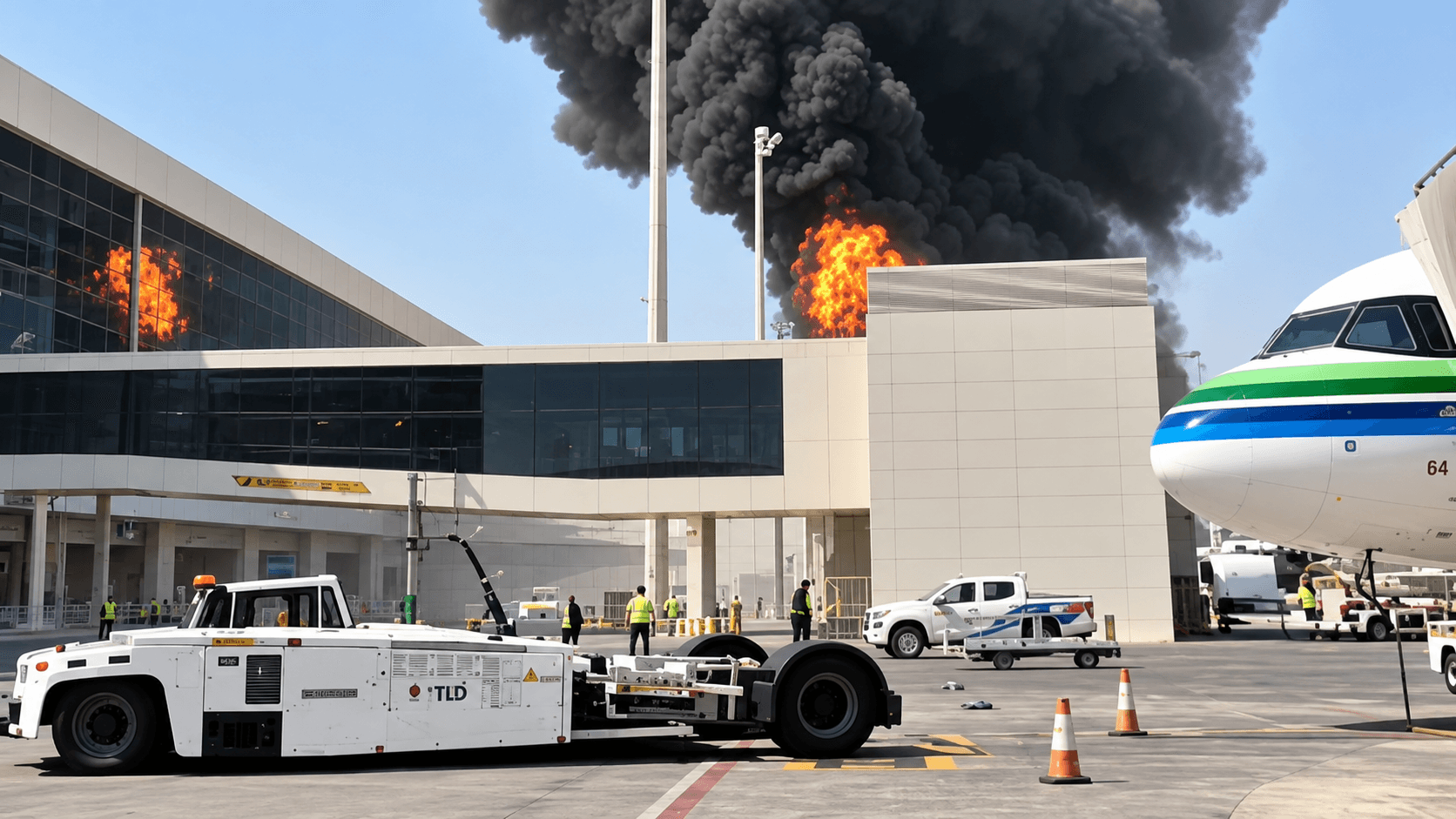
Saudi Arabia is facing a serious aviation security crisis after a reported strike hit Riyadh’s King Khalid International Airport on 10 October, leaving at least 12 people dead and more than 300 injured, according to initial figures released by authorities. The death toll from that attack later rose to 13 after an injured Indian national died. A separate strike the following day killed another person and injured 11, raising fresh concerns about the safety of the kingdom’s aviation infrastructure.
Saudi-led coalition officials blamed Yemen’s Houthi movement for the attacks, which came amid renewed fighting in Yemen and rising regional tensions. The incidents damaged airport facilities and forced authorities to suspend operations while emergency teams assessed the situation and carried out safety checks.
The disruption has spread well beyond Riyadh. Airlines have cancelled flights, adjusted schedules and advised passengers to expect delays as authorities continue to assess the risks. According to a notice to airmen cited by Reuters, the airport closure was extended until 21:00 GMT on 17 October.
The impact goes beyond the immediate casualties. Riyadh is a major centre for business travel, government activity, international investment and tourism. A prolonged shutdown at its main airport could disrupt commercial activity and undermine confidence in the kingdom’s ability to protect critical infrastructure during a regional conflict.
For now, the priority is to protect passengers and airport workers while ensuring that flights do not resume before it is safe to do so. The bigger challenge is preventing further attacks and restoring normal operations amid continued security concerns.
WHAT HAPPENED ON 10 OCTOBER?
King Khalid International Airport, located north of Riyadh, was struck on Saturday, 10 October, in an incident that Saudi authorities described as an attack on civilian aviation infrastructure.
Saudi Arabia’s General Authority of Civil Aviation initially reported 12 deaths and 309 injuries. Those affected included Saudi citizens and foreign nationals from several countries, including Bangladesh, the United States, Egypt, Jordan, Syria, Palestine and Sudan. Some of the injured were reported to be in critical condition and were taken to hospitals for treatment.
According to Reuters, the airport had come under attack three times during that week. The earlier incidents had already raised concerns about the security of aviation facilities in the Saudi capital.
Following the 10 October strike, airport operations were suspended while emergency services and relevant authorities assessed the damage. Officials also had to determine whether the airport’s buildings, runways and operational systems could safely support a return to normal activity.
Saudi-led coalition officials blamed the Houthis, describing the incident as a serious threat to civilian safety. The attacks came amid renewed confrontation in Yemen and continuing tensions between the group and Saudi Arabia.
The location of the strike made the incident particularly concerning. An international airport relies on the smooth coordination of passenger terminals, aircraft stands, air traffic systems, baggage handling, security checkpoints and emergency services. Damage to even part of that network can trigger extensive inspections and delay reopening.
THE DEATH TOLL RISES AS ANOTHER STRIKE FOLLOWS
The full human cost of the attacks became clearer in the days that followed.
An Indian national who was injured in the 10 October strike later died, bringing the reported death toll from that incident to 13. On 11 October, another projectile struck the airport’s Terminal 4 area, killing one person and injuring 11 others, according to Saudi authorities and reports by Reuters and the Associated Press.
The second incident raised concerns that the danger had not passed with the initial airport shutdown. Authorities now had to assess the damage while also preparing for the possibility of further attacks.
The follow-up strike reportedly affected an area used for domestic flights. Reuters quoted a witness who described a projectile hitting near parked aircraft and causing a fire. An aircraft that was taxiing returned to its gate, and passengers were asked to disembark.
These incidents have complicated efforts to restore airport operations. Officials must inspect affected buildings, check runways and taxiways, verify essential systems and coordinate with security agencies before deciding whether flights can safely resume.
The casualty figures also need to be kept separate. The 13 deaths relate to the 10 October attack, including the person who died later from their injuries. The separate 11 October strike killed one person and injured 11. Earlier attacks during the same week were also reported to have caused casualties.
Keeping these incidents distinct is important for understanding the scale and sequence of the violence.
AIRPORT CLOSURE DISRUPTS TRAVEL ACROSS THE REGION
Saudi authorities extended the suspension of operations at King Khalid International Airport while safety inspections continued. A notice to airmen cited by Reuters said the airport would remain closed until 21:00 GMT on 17 October.
The shutdown has forced airlines to revise schedules, cancel services and make alternative arrangements for passengers. Some carriers have also adjusted services to other Saudi destinations and regional routes in response to the changing security situation.
Reuters reported that airlines including Lufthansa, Air France-KLM, Etihad Airways, IndiGo, Air India, Gulf Air and Philippine Airlines had announced suspensions, cancellations or schedule changes affecting Saudi routes. Delta Air Lines also postponed its planned Atlanta–Riyadh service until March 2027.
The restrictions vary by airline and destination, and passengers should not assume that every service is affected in the same way.
For travellers, the disruption has meant missed connections, longer stays, uncertain refund arrangements and the need to find alternative routes. Passengers should check directly with their airlines and follow official airport updates before travelling, as schedules can change at short notice.
Airlines also face significant operational challenges. Aircraft and crew may need to be repositioned, flight rotations reorganised and passengers transferred to alternative services. When a major airport remains closed for several days, the disruption can spread through airline networks well beyond the affected city.
The economic implications are also significant. Reliable international connections are important to Saudi Arabia’s efforts to attract investment, expand tourism and strengthen Riyadh’s position as a business destination. Prolonged disruption could affect companies, events, visitors and airlines operating in the region.
WHY THE ATTACK MATTERS FOR CIVIL AVIATION SECURITY
Airports are among the most heavily controlled civilian facilities, but their size and complexity make them difficult to protect against every possible threat. They bring together large numbers of people, valuable aircraft, fuel systems and interconnected infrastructure that must continue functioning safely during emergencies.
A missile or projectile strike can create several risks at once.
Passenger safety: Terminals can be crowded, leaving people with little time to react to an unexpected impact. Injuries may result from the strike itself, fires, falling debris or emergency evacuations.
Aircraft and ground operations: Parked aircraft, fuel infrastructure, ground vehicles and airport equipment can all be exposed to damage. Even when aircraft are not directly hit, authorities may need to inspect nearby facilities before allowing operations to resume.
Air traffic and route safety: Security warnings can lead to flight diversions, temporary airspace restrictions and cancellations. Airlines must assess changing risks and follow instructions from aviation authorities before operating affected routes.
Emergency response: Airports depend on close coordination between firefighters, medical teams, police, aviation authorities and airline personnel. Repeated attacks can stretch these resources and make recovery more difficult.
Public confidence: Travellers need reliable information about safety and flight operations. Conflicting updates or prolonged uncertainty can discourage travel even after the immediate danger has eased.
The Riyadh incidents show how an attack can develop into a wider aviation emergency without necessarily destroying an entire airport. Temporary closures, safety inspections and declining passenger confidence can continue to affect operations long after the initial incident.
THE HOUTHI CAMPAIGN RAISES FEARS OF REGIONAL ESCALATION
The attacks on Riyadh’s airport came amid an intensifying confrontation between the Houthis and Saudi Arabia. The group has threatened further attacks on Saudi airports and oil facilities, while Saudi-led forces have continued military operations against Houthi-held targets in Yemen.
This raises the risk of a cycle of retaliation. Attacks on Saudi infrastructure could prompt further military action, potentially leading to additional strikes and expanding the range of sites considered vulnerable.
The wider regional context makes the situation particularly concerning. Saudi Arabia is an important aviation and energy hub, connecting travellers and businesses across Asia, Europe, Africa and the Middle East. Disruptions in Riyadh can therefore affect international travel even when other airports in the region remain operational.
Foreign nationals working or travelling in Saudi Arabia may also face uncertainty as governments and airlines review their advice. Businesses could postpone meetings, move events online or delay travel until conditions become clearer.
Attribution remains an important part of the story. Saudi-led coalition officials have blamed the Houthis for the airport attacks, while the group has claimed responsibility for a series of operations. These claims should be reported in context, with the available evidence for individual incidents distinguished from broader political interpretations of the conflict.
The immediate question is whether further attacks will occur and whether other civilian facilities will be targeted. Another strike could prolong the airport shutdown, increase casualties and place additional pressure on Saudi Arabia’s air-defence and emergency-response systems.
WHAT AIRLINES AND PASSENGERS SHOULD EXPECT
With Riyadh’s airport closed pending safety checks, the timing of a return to normal operations remains uncertain. The published closure deadline provides a planning reference, but it does not guarantee that flights will resume at that exact time.
Authorities must first determine whether the airport is safe to reopen and whether the wider security situation allows operations to continue.
Passengers scheduled to travel to or from Saudi Arabia should check their flight status directly with their airline before leaving for the airport. They should also confirm any rebooking arrangements, refund options and alternative routes.
Even if the airport reopens, airlines may continue to adjust schedules while security warnings remain in place. Travellers connecting through other Gulf airports should check their onward flights as well.
Businesses with employees travelling to the region may need contingency plans, including flexible bookings, alternative meeting arrangements and clear procedures for contacting staff during an emergency.
The disruption also highlights the importance of timely communication between aviation authorities and airlines. Clear notices and accurate passenger updates can reduce confusion, although they cannot eliminate the underlying security risks.
FACT CHECK METER
FACT METER: 98% — HIGH CONFIDENCE IN THE REPORTED EVENTS AND DISRUPTION
Status: The main incidents and their reported consequences are supported by statements attributed to Saudi aviation authorities and reporting from Reuters, the Associated Press and other international news organisations.
Confirmed details:
Saudi Arabia initially reported 12 deaths and 309 injuries from the 10 October attack on King Khalid International Airport.
Subsequent reporting said an injured Indian national died, bringing the reported death toll from that attack to 13.
A separate attack on 11 October killed one person and injured 11, according to reports attributed to Saudi authorities.
The airport closure was extended until 21:00 GMT on 17 October while safety procedures continued.
Multiple airlines announced cancellations, suspensions or schedule changes affecting services to Saudi Arabia.
Important distinctions:
The 13 deaths relate to the 10 October strike, including the later death of an injured person. The 11 October incident caused a separate fatality.
The stated reopening deadline does not guarantee that normal operations will resume immediately.
Saudi-led coalition officials attributed the attacks to the Houthis, and the group claimed responsibility for a series of strikes. Attribution should be presented in that context.
Disruption to individual routes does not necessarily mean that every Saudi airport or all Saudi airspace is closed.
AWX VERDICT: The reported attacks have caused a major aviation emergency, with 13 deaths and more than 300 injuries reported from the 10 October incident, followed by another strike that caused further casualties. The extended airport closure and airline suspensions have added to the human and economic cost. Protecting passengers and airport workers while preventing further attacks remains the immediate priority.
WHAT TO WATCH NEXT
Airport reopening: Whether authorities complete safety inspections by the published 17 October deadline and confirm when operations can safely resume.
Updated casualty figures: Whether officials release further verified information about deaths, injuries and patients still receiving treatment.
Further attacks: Whether the Houthis carry out additional strikes against airports or other Saudi infrastructure.
Airline schedules: Whether carriers restore services, extend cancellations or arrange alternative routes for affected passengers.
International travel advice: Whether governments revise guidance for Saudi Arabia and neighbouring countries as the security situation develops.
Regional escalation: Whether further military operations and retaliation widen the conflict or increase threats to civilian aviation.
THE AWX BOTTOM LINE
The reported strike on Riyadh’s King Khalid International Airport has turned an already tense regional situation into a major aviation security emergency. The 10 October attack initially left 12 people dead, with the toll later rising to 13, and injured more than 300. A separate strike the following day killed another person and injured 11.
The prolonged airport closure has disrupted airline schedules and complicated travel across the region. The consequences extend beyond passengers and carriers, potentially affecting Saudi Arabia’s commercial links, international events and ambitions to establish Riyadh as a global business destination.
The next challenge is restoring airport operations without putting travellers and staff at further risk. Until authorities can establish that flights can resume safely, the crisis remains both a human tragedy and a warning about the vulnerability of civilian aviation during an escalating conflict.
ATTLAS WIRE | AWX WORLD NEWS
Real Stories. Lasting Impact.



Comments
No comments yet.