


Saudi Arabia has issued a firm warning to Yemen’s Houthi movement, making clear that continued attacks on its airports, civilian infrastructure and economic assets will not go unanswered. Following a Cabinet meeting chaired by Crown Prince and Prime Minister Mohammed bin Salman on 13 October, Riyadh reaffirmed its support for coalition military operations in Yemen and stressed that protecting the kingdom’s security and keeping vital shipping routes open remain key priorities.
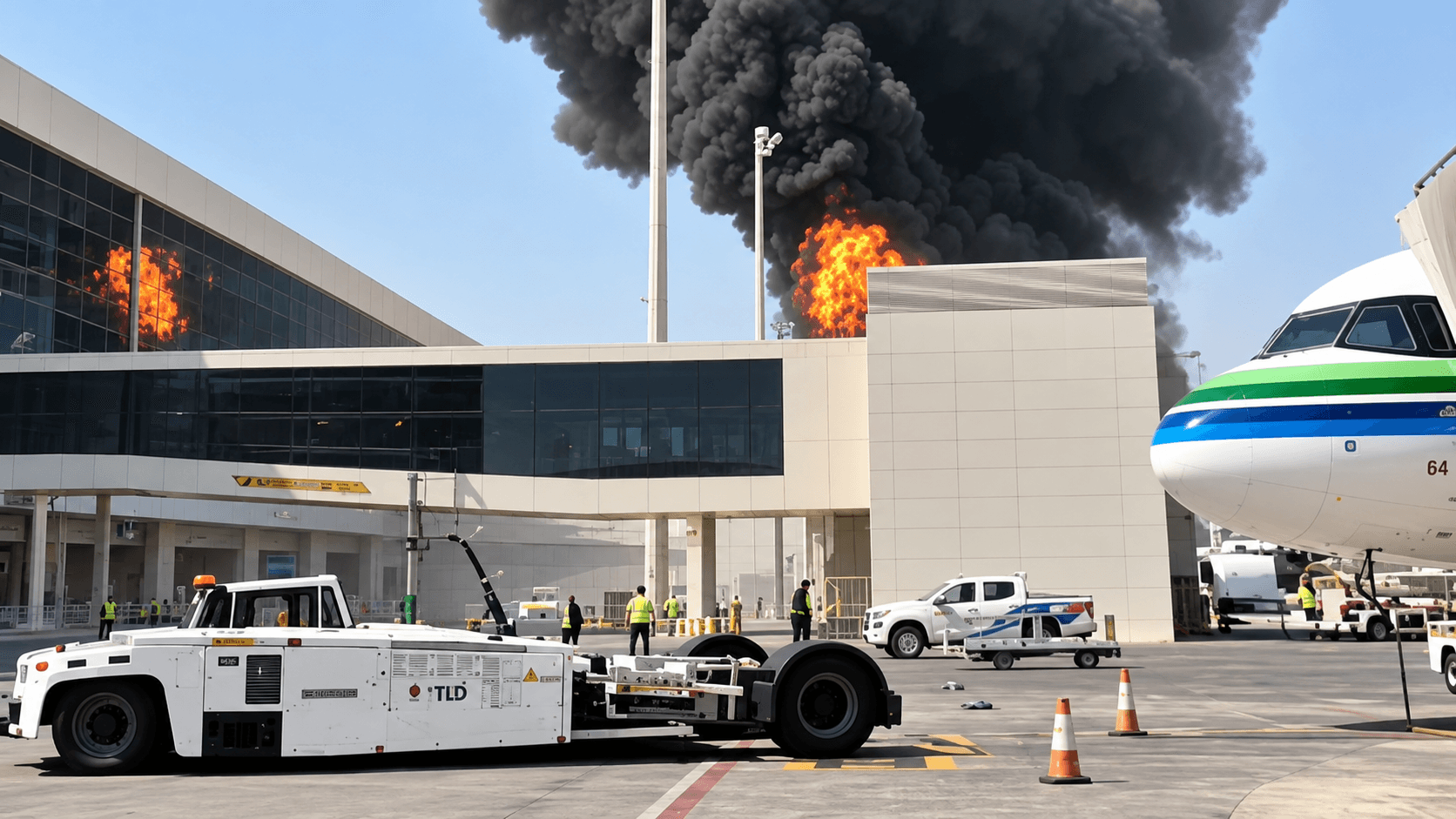
The warning comes amid growing tensions between Saudi Arabia and the Houthis. Recent reports have described attacks targeting sensitive locations across the kingdom, including airports and economic facilities. On 13 October, an administrative building at Saudi Aramco’s headquarters in Dhahran was reportedly struck. Saudi authorities have also reported intercepting missiles over Riyadh, with falling debris injuring civilians and damaging homes.
Riyadh’s message carries both political and military significance. The Cabinet praised Saudi forces for defending the country and protecting its people and resources, while reiterating support for efforts to counter the Houthi threat. It also highlighted the importance of safeguarding maritime traffic through the Red Sea and the Bab al-Mandeb Strait, a critical passage for international trade.
The statement does not confirm that Saudi Arabia has authorised a new military campaign. Instead, it reinforces the government’s existing position: the kingdom intends to defend its territory, protect its economic interests and resist further attacks.
The central question now is whether the warning will discourage the Houthis from launching further attacks or deepen an already dangerous cycle of strikes and retaliation. With fighting continuing in Yemen and shipping security under pressure, the consequences could reach well beyond the immediate conflict.
THE CABINET DELIVERS A CLEAR WARNING
The Saudi Cabinet’s statement on 13 October followed a series of reported Houthi attacks and threats against Saudi targets. According to reports published by the Saudi Press Agency and other regional news organisations, the Cabinet condemned attacks on airports, the holy cities of Makkah and Madinah, visitors to the Two Holy Mosques, and civilian and economic facilities. It warned that the Houthis would face consequences for their actions.
The Cabinet also praised the Saudi armed forces for protecting the kingdom’s sovereignty, population and resources. The message reflects Riyadh’s determination to present the confrontation as a direct national security concern rather than a conflict limited to Yemen.
The choice of targets is particularly significant. Airports are essential to passenger travel, commercial activity and emergency transport. Threats to energy infrastructure can unsettle markets and raise concerns about the reliability of oil supplies. Attacks affecting religious sites or visitors also carry serious humanitarian and political implications.
However, the Cabinet did not announce a specific timetable for further military action or outline a new operational plan. Its statement was primarily a declaration of policy: Saudi Arabia intends to continue defending its territory, support coalition operations in Yemen and oppose threats to maritime navigation.
The warning also serves as an attempt at deterrence. Riyadh wants the Houthis to understand that continued attacks could bring a stronger response rather than force the kingdom to change course.
Whether that message has the intended effect will depend on the decisions made by Houthi leaders, the effectiveness of Saudi air defences and the willingness of regional actors to help prevent further escalation.
WHY SAUDI ARABIA CONTINUES TO BACK OPERATIONS IN YEMEN
Saudi Arabia has long supported Yemen’s internationally recognised government and the Presidential Leadership Council, which represents the government-aligned political leadership. Riyadh says its involvement is intended to support Yemen’s state institutions, protect civilians and counter the Houthis’ control over parts of the country.
At its 6 October meeting, the Saudi Cabinet reiterated its commitment to supporting Yemen’s government as tensions intensified. It accused the Houthis of choosing military escalation over peace and warned that their actions were worsening Yemen’s humanitarian and economic difficulties while threatening regional security and maritime traffic.
The latest developments have brought those concerns back into focus. Saudi-backed Yemeni forces have reportedly stepped up operations against Houthi positions, particularly along the western coast and in areas near the strategically important Bab al-Mandeb Strait. Saudi-led airstrikes have supported the campaign, while the Houthis have threatened retaliation against Saudi territory.
From Riyadh’s perspective, allowing the Houthis to retain the ability to strike cities, airports and energy facilities would leave the kingdom vulnerable to continued attacks. Supporting military operations in Yemen is therefore presented as part of a wider effort to reduce the threat.
But the military calculation is far from straightforward. Yemen’s conflict has lasted for years, and territorial gains have repeatedly failed to produce a lasting political settlement. Even if coalition-backed forces capture additional ground, they must still secure supply routes, protect local communities and prevent renewed attacks.
There is also a significant humanitarian cost to consider. Airstrikes and ground fighting can damage roads, disrupt essential services and restrict access to food, fuel and medical care. The risks are especially serious when fighting takes place near populated areas.
Saudi Arabia says its objective is to protect the kingdom and support Yemen’s recognised authorities. The longer-term question is whether increased military pressure can deliver lasting security or simply lead to another prolonged period of retaliation.
RED SEA AND BAB AL-MANDEB: A STRATEGIC CONCERN
One of the most important aspects of the Cabinet’s statement was its emphasis on freedom of navigation.
The Bab al-Mandeb Strait connects the Red Sea with the Gulf of Aden and the wider Indian Ocean. Along with the Red Sea and Suez Canal, it forms part of a major shipping corridor linking Europe and Asia. The route carries manufactured goods, energy supplies and other commodities essential to international trade.
Any sustained disruption could have consequences far beyond Yemen. When shipping companies consider a route too dangerous, they may divert vessels around the Cape of Good Hope. Such detours increase travel times, fuel consumption and operating costs, potentially pushing up freight rates and delaying deliveries.
The Houthis have previously threatened or attacked commercial vessels in the Red Sea, presenting their actions as part of a wider regional confrontation. Riyadh’s latest statement makes clear that it considers the security of these waterways an important national and economic interest.
Saudi Arabia depends on international trade and energy exports, while its ports and logistics networks help connect Gulf markets with the wider world. Disruption to maritime traffic could therefore affect commercial activity even if Saudi territory itself remains largely unaffected.
The danger is not limited to a complete closure of the strait. Repeated attacks, security warnings and uncertainty can be enough to prompt shipping companies to change routes and insurers to reassess coverage. Traders may also factor potential delays and higher transport costs into their calculations.
A further escalation could complicate international efforts to protect commercial vessels. Naval patrols, surveillance and cooperation between governments can reduce some risks, but they cannot eliminate the possibility of attacks.
By highlighting the Red Sea and Bab al-Mandeb, Riyadh is signalling that the consequences of the Yemen conflict extend beyond national borders. Maritime security has become part of a much wider debate about regional stability and the uninterrupted flow of international commerce.
AIRPORTS AND OIL INFRASTRUCTURE FACE GROWING PRESSURE
The Cabinet’s warning came amid reports of attacks on sensitive Saudi infrastructure.
On 13 October, Saudi authorities reported a limited fire at an administrative building within Saudi Aramco’s Dhahran compound following an attack. Officials said there were no reported injuries or fatalities at the building. Other reports described damage to offices used by senior executives.
The extent of the damage and its effect on Aramco’s operations remain separate questions. An attack on an administrative building does not, by itself, establish that oil production or exports have been disrupted.
Saudi authorities have also reported that debris from two intercepted missiles fell in residential areas of Riyadh, injuring four people and damaging 15 homes. Civil defence teams responded to the affected neighbourhoods.
These incidents highlight the challenges of protecting large cities and widely distributed infrastructure from repeated missile and drone threats. Intercepting an incoming weapon can prevent a direct strike, but falling debris may still injure residents or damage property. Effective protection therefore requires both strong air defences and rapid emergency responses on the ground.
The economic stakes are substantial. Saudi Arabia is one of the world’s leading oil producers and exporters, and Aramco operates infrastructure central to the kingdom’s energy industry. Repeated threats against oil-related facilities can raise concerns about the security of processing sites, pipelines and export operations, even when there is no confirmed disruption to production.
Airports are equally important to the country’s daily life and commercial activity. Attacks or credible threats can disrupt airline schedules, affect business travel and complicate emergency transport. They can also undermine confidence among passengers and international businesses operating in the region.
For Riyadh, the challenge is to prevent further attacks while reassuring residents, investors and trading partners that critical infrastructure remains protected.
The government’s latest warning is intended to make clear that attacks on civilian and economic assets will not simply be accepted as an unavoidable part of the conflict.
THE HOUTHI RESPONSE WILL HELP SHAPE WHAT HAPPENS NEXT
The Houthis have described attacks on Saudi targets as retaliation for Saudi-led military operations in Yemen. Following reported coalition strikes against Houthi-controlled fuel infrastructure near Sanaa, the movement threatened further attacks against Riyadh and Saudi Aramco facilities.
That position risks reinforcing a familiar cycle of escalation. Saudi-led forces strike Houthi-linked targets, the Houthis retaliate against Saudi infrastructure, and Riyadh faces pressure to respond with further military action.
The Cabinet’s warning may be intended to discourage another attack. However, Houthi leaders could interpret it as evidence that Saudi Arabia intends to maintain or increase military pressure. The outcome will depend on how both sides assess the risks and potential costs of continuing the confrontation.
Several developments will be important to watch. Saudi air defences will face continued pressure if missile and drone threats persist. Houthi leaders will have to weigh the potential benefits of further attacks against the possibility of more extensive coalition operations. Meanwhile, Yemeni government forces will need to consolidate any territorial gains rather than leave them vulnerable to counterattacks.
Regional governments also face a difficult task: preventing the confrontation from spreading into additional areas or drawing more countries into direct military involvement.
The risk of miscalculation remains high. An attack that causes unexpected casualties or strikes a particularly sensitive target could trigger a response more severe than either side initially intended. As attacks continue, the space for diplomatic intervention may narrow.
This is where deterrence becomes difficult to distinguish from escalation. Riyadh wants to make clear that further attacks will carry a price. Whether that warning encourages restraint or prompts another round of retaliation remains uncertain.
CIVILIANS CONTINUE TO BEAR THE RISKS
Although the Saudi Cabinet’s statement focused on national security, the renewed fighting has serious consequences for civilians in both Yemen and Saudi Arabia.
Years of conflict have weakened Yemen’s public services, disrupted local markets and left many people dependent on humanitarian assistance. Renewed airstrikes and ground operations can damage roads, fuel facilities and other infrastructure needed to deliver food, clean water and medical supplies.
Restrictions on movement can make matters worse, preventing people from reaching hospitals or escaping areas where fighting is intensifying. Humanitarian organisations need reliable access to affected communities, but insecurity and damaged transport routes can delay relief efforts.
In Saudi Arabia, missile interceptions and falling debris pose risks to residents, while attacks on airports and energy-related facilities can affect workers and nearby communities. Protecting civilians means more than intercepting incoming weapons. It also requires effective emergency planning, timely warnings and careful consideration of the wider effects of military operations.
International humanitarian law requires parties to a conflict to distinguish between civilians and combatants, take feasible precautions to minimise civilian harm and avoid indiscriminate or disproportionate attacks. These obligations apply to all parties, regardless of their stated military or political objectives.
Ultimately, lasting security will require more than military deterrence. Reducing attacks, protecting civilian infrastructure, ensuring humanitarian access and creating conditions for renewed political negotiations will all be important to preventing further suffering.
FACT CHECK METER
FACT METER: 98% — HIGH CONFIDENCE IN THE REPORTED CABINET POSITION
Status: The central claims about Saudi Arabia’s stated position are attributed to the Cabinet statement and reporting by regional news organisations. The percentage reflects the reported consistency of the central claims, not an independently calculated statistical probability.
Confirmed details:
On 13 October 2026, the Saudi Cabinet, chaired by Crown Prince Mohammed bin Salman, reaffirmed support for coalition operations in Yemen and warned the Houthis over repeated attacks on the kingdom.
The Cabinet condemned attacks affecting airports, Makkah and Madinah, visitors to the Two Holy Mosques, and civilian and economic infrastructure.
Saudi Arabia emphasised its commitment to protecting national security and freedom of navigation in the Red Sea and Bab al-Mandeb Strait.
Saudi authorities reported a limited fire at an Aramco administrative building in Dhahran and said there were no casualties at that building.
Saudi Civil Defence reported four injuries and damage to 15 homes following the fall of debris from intercepted missiles in Riyadh.
Important distinctions:
The Cabinet’s warning establishes the government’s stated position; it does not confirm that a new military operation has been authorised.
Saudi Arabia’s account of the attacks and the Houthis’ explanation of their actions represent opposing positions in the conflict.
The reported incident at Aramco’s Dhahran headquarters does not, on its own, demonstrate that oil production or exports were disrupted.
Saudi Arabia’s commitment to protecting maritime navigation does not guarantee that commercial vessels will be free from attacks, delays or route changes.
AWX VERDICT: Riyadh has reinforced its position by backing coalition operations in Yemen and warning that repeated Houthi attacks will carry consequences. Its emphasis on the Red Sea and Bab al-Mandeb shows that the kingdom views maritime security as closely connected to its national defence and economic interests. The warning signals resolve, but its impact will depend on whether it deters further attacks or contributes to another round of retaliation.
WHAT TO WATCH NEXT
Saudi military response: Whether Riyadh changes or expands its support for coalition operations following the Cabinet’s warning.
Houthi retaliation: Whether the group launches further attacks against Saudi airports, cities, oil facilities or other economic assets.
Air-defence activity: Whether Saudi authorities report additional missile or drone interceptions and further civilian injuries from falling debris.
Red Sea shipping: Whether commercial carriers change routes or schedules in response to renewed threats around Bab al-Mandeb.
Oil-market reaction: Whether the confrontation causes confirmed operational disruptions or primarily increases concerns about regional supply risks.
Diplomatic efforts: Whether regional governments and the United Nations can help reduce attacks and create space for renewed negotiations.
THE AWX BOTTOM LINE
Saudi Arabia’s Cabinet has delivered a firm message: the kingdom intends to defend its territory, continue supporting coalition operations in Yemen and respond to threats against its civilian and economic infrastructure.
The statement also highlights the growing importance of maritime security. By naming the Red Sea and Bab al-Mandeb Strait, Riyadh has linked its national security concerns to an international shipping corridor connecting Europe, Asia and the Gulf.
But a tougher warning does not resolve the underlying conflict. The Houthis have threatened retaliation, military operations continue, and civilian infrastructure remains vulnerable to the consequences of further escalation.
The coming days will help determine whether Riyadh’s message discourages additional attacks or becomes another trigger for military action. For Saudi Arabia, Yemen and the wider region, the priority is to prevent the confrontation from developing into a more sustained threat to civilian lives, energy supplies and international trade.
ATTLAS WIRE | AWX WORLD NEWS
Real Stories. Lasting Impact.


Comments
No comments yet.