

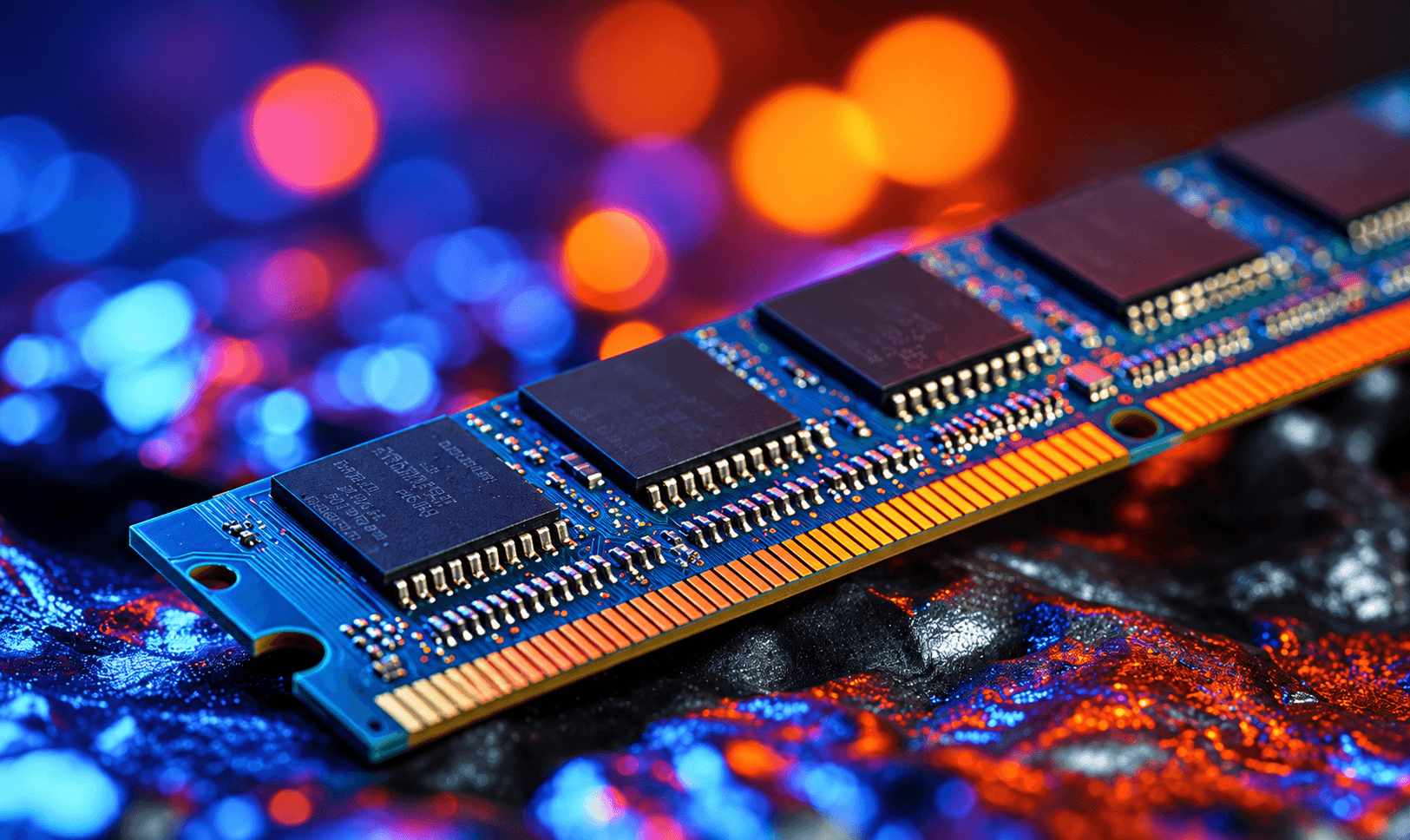
The global memory-chip shortage is showing few signs of easing. As technology companies pour money into artificial intelligence, demand for memory is growing faster than manufacturers can bring new capacity online. The squeeze is spreading beyond AI data centres, putting pressure on the components used in laptops, desktop computers, smartphones and other electronic devices.
Micron Technology and Samsung Electronics have warned that tight supply conditions could persist through 2028. Micron CEO Sanjay Mehrotra told investors in late September that demand for the company's memory and storage products was expected to outstrip supply in both 2027 and 2028. He also warned that the imbalance could become more severe than it was in 2026. Samsung executives have expressed similar concerns about the industry's outlook.
At the heart of the problem is the rapid expansion of AI computing. Advanced AI systems need enormous amounts of memory to process data efficiently, and manufacturers are directing more resources towards high-bandwidth memory (HBM), a specialised component used in powerful AI processors.
That shift is creating headaches for the wider electronics industry. AI companies are signing long-term supply agreements and paying premium prices to secure the components they need. PC makers and smartphone manufacturers, meanwhile, must compete for production capacity while trying to keep their own costs under control.
For consumers, the consequences could include more expensive memory upgrades, higher prices for computers and smartphones, fewer affordable configurations and a longer wait for prices to settle.
A shortage lasting until 2028 does not necessarily mean every type of memory will remain difficult to find throughout that period. Supply conditions vary by product, manufacturer and customer. Still, the message from the industry is clear: the AI boom is reshaping the memory market, and increasing production will take time.
WHY AI IS USING SO MUCH MEMORY
AI needs more than powerful processors. It also depends on memory to store the data and model parameters that processors must access while performing calculations.
Training a large AI model involves working through vast datasets and constantly moving information between computing units. Running a trained model, a process known as inference, also requires substantial memory, especially when systems serve large numbers of users or handle complex requests.
High-bandwidth memory has become particularly important because it can move large amounts of data quickly between memory and AI processors. This helps advanced accelerators handle demanding workloads more efficiently.
HBM differs from the DDR4 and DDR5 memory commonly found in consumer computers. However, the two markets are connected through manufacturers, production equipment, wafer capacity and investment decisions.
As demand for HBM grows, manufacturers are dedicating more resources to producing it. That can leave less capacity available for conventional DRAM, even when demand for memory used in everyday electronics remains strong.
Industry reporting based on comments from Samsung executives suggests HBM could account for close to 30% of DRAM wafer capacity in 2027, up from roughly 20% in 2026.
This helps explain why a shortage driven by AI data centres can affect someone buying RAM for a home computer. The products are different, but they rely on some of the same manufacturing resources.
MICRON WARNS THE SUPPLY GAP COULD WIDEN
Micron is one of the world's leading memory manufacturers, supplying DRAM, NAND flash and specialised memory for servers, computers and other electronic devices.
Its latest outlook suggests that increasing production will not be enough to close the supply gap quickly.
During discussions around its fiscal 2026 results, Micron said demand for memory and storage was expected to exceed supply in calendar years 2027 and 2028. The company also indicated that much of its planned fiscal 2027 output had already been committed to customers, while discussions over additional supply were increasingly looking towards 2028.
Long-term agreements help major customers secure the components they need. But they can also leave smaller buyers and companies without comparable purchasing power struggling to obtain memory at competitive prices.
Micron's strategy also reflects the changing economics of the market. The company has exited its Crucial consumer-memory business and increasingly focused on larger customers and higher-growth segments, including data centres and AI infrastructure.
That does not mean Micron has stopped producing chips that ultimately end up in consumer electronics. Its components can still reach device manufacturers through other supply arrangements. However, the decision highlights how companies are reassessing their priorities as AI-related demand grows.
Micron's forecast should not be read as a guarantee that every market will face the same level of shortages until the end of 2028. It is a warning that the overall balance between supply and demand could remain under pressure for an extended period.
SAMSUNG AND SK HYNIX ARE ALSO FEELING THE PRESSURE
Samsung Electronics and SK Hynix are two other major players in the global memory industry. Both are investing heavily in advanced memory technologies to meet demand from AI processor makers and data-centre operators.
Samsung warned in July that supply constraints could continue through 2028. The company also reported strong interest from major technology firms seeking long-term supply agreements, with some arrangements extending across several years.
These contracts give manufacturers a clearer picture of future demand. They can also make it easier to justify investments in new equipment and production lines when customers are committing to substantial purchases.
But expanding semiconductor production is a complicated process. New facilities require specialised equipment, clean-room infrastructure, skilled workers and extensive testing before they can produce large volumes of reliable chips.
Manufacturers must also decide how much capacity to allocate to each product. HBM requires specialised manufacturing and packaging processes, while demand can shift as AI hardware develops.
For now, the world's largest technology companies are competing to secure future supplies before additional production capacity becomes widely available.
WHY BUILDING MORE FACTORIES WILL TAKE TIME
The shortage is partly a capacity problem, and semiconductor manufacturing cannot expand overnight.
Companies are investing in new facilities and upgrading existing plants, but the extra output will arrive gradually. Production lines need to be installed, manufacturing processes qualified and yields improved before factories can consistently deliver large volumes of chips.
A September 2026 analysis from the Center for Strategic and International Studies described the shortage as a structural challenge linked to rising AI demand and the time needed to expand semiconductor manufacturing. The analysis suggested tight conditions could persist through 2027 and potentially into 2028, when significant new capacity is expected to become available.
Even when a new facility begins producing chips, the impact on global supply is not immediate. Output must ramp up, and early production may already be committed to customers who have secured supply agreements.
Demand is also continuing to grow. If AI companies build data centres faster than manufacturers can expand production, much of the additional memory could be absorbed before it reaches other markets.
That is why industry executives are warning that conditions could become more difficult before they improve.
PC BUYERS COULD FACE HIGHER PRICES
The pressure on memory supplies could make computers more expensive and force manufacturers to reconsider the specifications they offer at different price points.
Memory is an important component in laptops, desktop PCs and workstations. When prices rise, manufacturers have a few choices: absorb the extra cost, increase retail prices or offer less memory in some configurations.
For buyers, that could mean paying more for a laptop or finding that a budget model comes with less memory than a comparable device offered previously.
Gaming PCs and workstations used for video editing, design and other demanding tasks could be particularly affected because they often require substantial memory. Businesses purchasing computers in large quantities may also face higher costs.
A recent ITPro report citing Gartner data said global PC shipments fell 22.4% year over year in the third quarter of 2026, reaching 55.4 million units. The report linked the decline partly to rising component costs and affordability concerns, including higher memory prices.
The figures point to the potential impact of rising component costs, although memory shortages are not the only factor affecting computer shipments. Replacement cycles, business spending, economic conditions and product availability also play a role.
For consumers planning an upgrade, the decision may come down to whether buying now makes more sense than waiting. There is no guarantee prices will fall soon, but that does not mean every computer or memory product will become more expensive at the same rate.
SMARTPHONES AND OTHER ELECTRONICS ARE ALSO AT RISK
Computers are not the only devices affected by the squeeze. Smartphones depend on memory to run applications, manage background tasks and support increasingly sophisticated camera and AI features. Tablets, gaming consoles, networking equipment and other connected devices also rely on semiconductor memory.
If component costs stay high, manufacturers may have to raise prices, reduce specifications or focus on their most profitable models.
Premium devices can sometimes absorb higher costs more easily because their selling prices and margins are higher. Budget products have less room to manoeuvre, making even a moderate increase in memory prices difficult to manage.
Some manufacturers may respond by offering fewer entry-level configurations, adjusting existing designs or looking for alternative suppliers where technically feasible.
Switching suppliers, however, is not as simple as replacing one chip with another. Manufacturers must check compatibility, performance, reliability, power consumption and production requirements before making changes.
As a result, the impact will differ across product categories. Some companies may pass higher costs on to buyers, while others may absorb part of the increase or adjust their product specifications.
AI COMPANIES HAVE A PURCHASING ADVANTAGE
One of the biggest differences in today's memory market is the purchasing power of AI companies compared with traditional electronics manufacturers.
Large cloud providers and AI developers are spending billions of dollars on data centres. They need substantial quantities of specialised memory and are often willing to sign long-term contracts to ensure their infrastructure projects stay on schedule.
For memory manufacturers, these customers can offer large orders, predictable demand and greater visibility into future revenue.
Consumer-device makers operate under different pressures. PC and smartphone manufacturers often face intense competition and tight margins, leaving them less room to pay premium prices for scarce components.
That does not make consumer electronics unimportant. PCs, smartphones and other devices remain major markets for memory producers. But strong demand and attractive returns in AI-related products can influence how manufacturers allocate both production capacity and investment.
The result is a growing imbalance: AI infrastructure is consuming more memory, while the capacity needed to serve other markets cannot be expanded quickly enough to keep pace.
COULD CHINA HELP EASE THE SHORTAGE?
Chinese memory manufacturers could provide additional supply over time, particularly for standard DRAM used in consumer electronics.
Companies such as ChangXin Memory Technologies are working to expand China's domestic memory industry. Earlier in 2026, Reuters reported on a Nikkei Asia account that several major PC manufacturers were considering or evaluating Chinese memory chips as they looked for alternatives amid rising prices and constrained supply. Reuters said it could not independently verify the report at the time.
More suppliers could help diversify the market and ease pressure in some segments. However, their contribution will depend on production volumes, reliability, technical qualifications and the range of products they can deliver.
Standard PC memory and HBM used in advanced AI accelerators have different performance and packaging requirements. A supplier capable of producing one type cannot necessarily replace another across the board.
Chinese manufacturers may therefore help relieve shortages in selected markets without immediately solving the wider problem.
Trade restrictions, customer approval processes and the time needed to scale up production could also influence how quickly new supply becomes available.
WILL MEMORY PRICES FALL WHEN NEW CAPACITY ARRIVES?
Even if the industry adds substantial production capacity by 2028, that does not guarantee an immediate return to earlier prices.
Memory prices depend on several factors, including how quickly new capacity comes online, how much AI companies continue to invest, demand from consumer electronics and the mix of products manufacturers produce.
If supply begins growing faster than demand, prices could ease. But if AI infrastructure continues expanding rapidly, new capacity may be absorbed almost as quickly as it becomes available.
The memory industry has also experienced cycles of oversupply and shortages in the past. Manufacturers must expand production carefully, balancing current demand against the risk of creating excess capacity if the market later slows.
Long-term supply agreements offer greater visibility into future orders, but they cannot eliminate uncertainty about market conditions.
A July 2026 analysis from Deloitte suggested that the memory crunch could take longer to ease, potentially extending into 2029 depending on investment and demand.
That makes one thing clear: 2028 is a possible milestone for improved supply, not a firm deadline for the shortage to end.
WHAT COMPANIES AND CONSUMERS CAN DO
Businesses that depend on memory-intensive equipment may need to plan purchases further ahead than usual.
For manufacturers, long-term supply agreements and a broader supplier base can help reduce exposure to sudden shortages. These arrangements still require careful planning, however, and may involve committing to purchases well in advance.
Companies buying PCs and servers can review which upgrades are essential, consider extending the life of existing equipment and spread planned purchases across different periods where practical.
Consumers can take a similar approach without resorting to panic buying.
If you need a computer for work or study, focus on the specifications that match your actual needs rather than paying extra for memory you may never use. If your existing computer still handles your workload comfortably, delaying an upgrade could be a reasonable option.
Anyone planning a RAM upgrade should also check compatibility before buying. The supported memory type, capacity and configuration depend on the device, and an incompatible component can mean wasted money.
The goal is to make decisions based on practical needs and a realistic budget, rather than assuming every memory product will become unavailable.
FACT CHECK METER
FACT METER: 97% — INDUSTRY WARNINGS ARE SUPPORTED, BUT THE END DATE REMAINS UNCERTAIN
Status: Micron and Samsung have warned that memory supply could remain tight through 2028. Industry analysis also identifies rising AI demand and the time required to expand semiconductor production as key factors behind the squeeze.
Confirmed details:
Micron expects demand for memory and storage to exceed supply in 2027 and 2028.
Samsung has warned that memory shortages could persist through 2028.
AI infrastructure is driving strong demand for high-bandwidth memory.
Manufacturers are directing more resources towards advanced memory products for AI systems.
Expanding semiconductor production requires substantial investment and time.
Higher memory costs are putting pressure on PC makers and other electronics manufacturers.
Important distinctions:
Supply conditions vary across memory products and customer segments.
HBM and standard DDR memory are different products, although they share some manufacturing resources.
A shortage forecast through 2028 does not mean every memory product will be unavailable until then.
Some industry analysis suggests tight conditions could extend into 2029.
The timing of price relief will depend on production growth and the strength of AI demand.
AWX VERDICT: The warning that memory shortages could persist through 2028 is supported by statements from major manufacturers. AI demand is putting pressure on production capacity, and new facilities will take time to deliver substantial additional supply. However, 2028 should be treated as an industry forecast, not a guaranteed end date.
WHAT TO WATCH NEXT
Micron's next supply update: Watch for changes to its production plans, customer commitments and outlook for 2027 and 2028.
Samsung and SK Hynix expansion plans: New production lines and changes in HBM output will help determine how much memory becomes available to other markets.
PC and smartphone prices: Retail prices and product configurations will reveal how manufacturers are dealing with higher component costs.
New factories reaching full production: The pace at which facilities increase output will be crucial to easing supply constraints.
AI infrastructure spending: Continued data-centre expansion could keep memory demand elevated.
Alternative suppliers: Increased output from additional manufacturers could help ease pressure in selected markets, although technical and production limits remain.
The 2028–2029 outlook: Future industry forecasts will show whether supply is catching up with demand or the shortage is likely to last longer.
THE AWX BOTTOM LINE
The global RAM shortage is becoming a major challenge for the electronics industry. AI companies need enormous amounts of memory to power advanced computing systems, and manufacturers are devoting more resources to serving this fast-growing market.
Micron and Samsung have warned that tight supply could continue through 2028. For PC makers, smartphone brands and other electronics manufacturers, that could mean higher component costs for longer than expected.
The impact will not be the same across every product, and new manufacturing capacity should eventually help. But expanding production takes time, and continued investment in AI could absorb much of the additional supply.
For consumers, the sensible approach is to plan upgrades carefully, check actual requirements and avoid assuming that prices will quickly return to previous levels.
AI is driving the next computing boom, but it is also putting pressure on the memory that makes modern computing possible. Until supply catches up, the cost of that boom could be felt well beyond the data centre.
ATTLAS WIRE | AWX WORLD NEWS
Real Stories. Lasting Impact.


Comments
No comments yet.